

The Quick Take: Why Use Arts Therapies?
- Bypasses Verbal Barriers: Great for people who struggle to talk about trauma or complex emotions.
- Regulates the Nervous System: Rhythmic movements and sounds can lower cortisol and calm anxiety.
- Builds Self-Awareness: Creating something tangible allows you to "see" your internal state from the outside.
- Empowers the Individual: Shifting from a 'patient' role to a 'creator' role builds confidence.
Painting Your Inner World with Art Therapy
When people hear Art Therapy, they often imagine a painting class. But this is a mental health profession that uses visual media to facilitate emotional expression and psychological healing. In a real session, the therapist isn't judging your perspective or your choice of colors. They're looking at the process. For instance, if someone spends an hour meticulously erasing a single line, that's a significant data point about perfectionism or fear of failure.
Imagine a person dealing with chronic grief. They might not be able to say, "I feel empty," but they might paint a vast, gray void with a single tiny dot in the corner. By externalizing that void onto a canvas, the emotion becomes something they can look at, discuss, and eventually transform. This distance-the space between the person and the canvas-creates a safe environment to process pain without being overwhelmed by it.
Finding Your Rhythm through Music Therapy
Music Therapy is more than just listening to a relaxing playlist. It is an evidence-based clinical practice where music is used to achieve individualized goals within a therapeutic relationship. This can happen through active engagement, like drumming or songwriting, or receptive methods, like guided imagery with music.
Take the case of stroke recovery. Research from the neurologic music therapy field shows that rhythmic auditory stimulation can help patients relearn how to walk. The beat acts as a metronome for the brain, triggering motor neurons to fire in a synchronized way. On an emotional level, creating a song about a life transition helps a person organize their thoughts and find a sense of closure. It turns a chaotic internal noise into a structured melody.
| Modality | Primary Focus | Best For... | Common Tool/Medium |
|---|---|---|---|
| Art Therapy | Visual Expression | Trauma, Depression, Anxiety | Paint, Clay, Collage |
| Music Therapy | Auditory/Rhythmic | Neurological Rehab, Mood Regulation | Instruments, Voice, Playlists |
| Dance/Movement | Physical/Kinesthetic | Body Dysmorphia, Somatic Trauma | Guided Movement, Free Dance |
| Drama Therapy | Role-play/Action | Social Skills, Conflict Resolution | Scripts, Puppets, Improvisation |
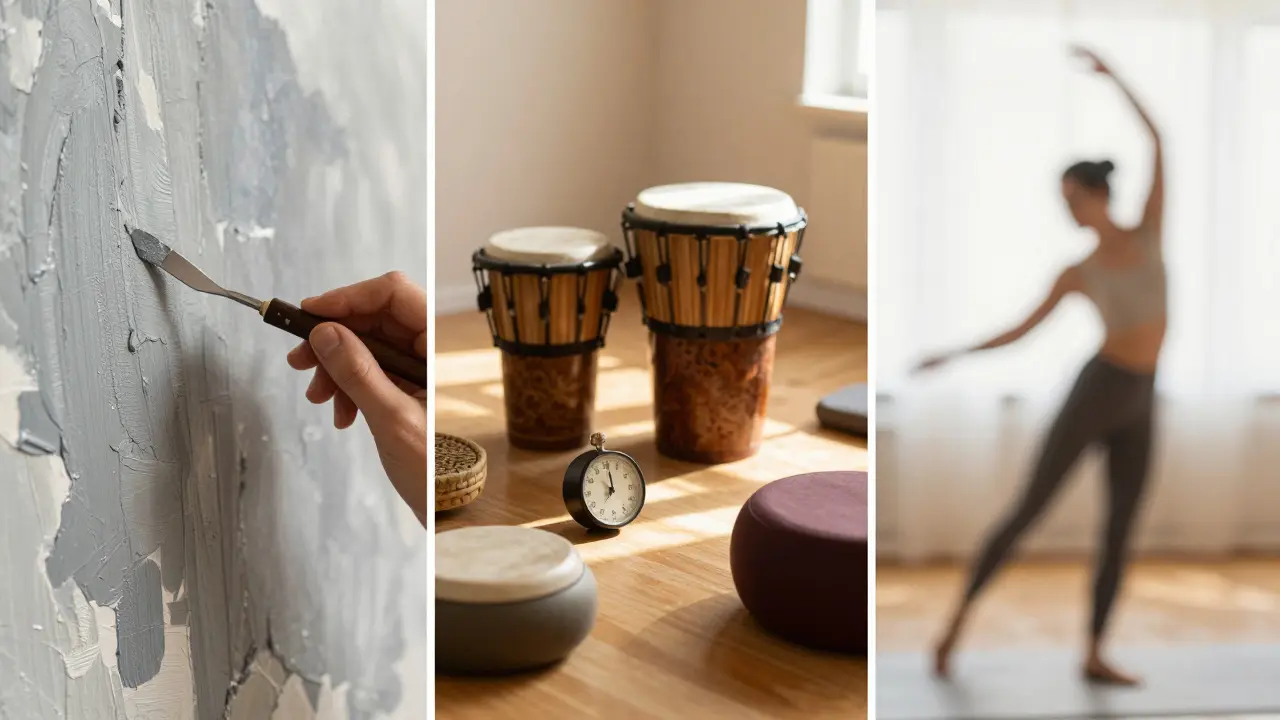
Moving Through Trauma: Dance and Movement Therapy
Our bodies store memories that our minds often forget. This is the basis of Dance Movement Therapy (DMT), which is the psychotherapeutic use of movement to promote the emotional, social, cognitive, and physical integration of the person. It operates on the belief that the mind and body are inseparable. When you're anxious, your shoulders hunch; when you're depressed, your movements slow down.
In a DMT session, a therapist might ask you to move like a "storm" and then transition into a "calm lake." By physically acting out these states, you're not just thinking about a feeling-you're feeling it in your muscles and joints. This is incredibly powerful for survivors of PTSD, as it allows them to gently reclaim their bodies and release stored tension that talk therapy simply cannot reach.
Stepping Into Another Life with Drama Therapy
Acting isn't just for Broadway; it's a tool for survival. Drama Therapy uses role-play, improvisation, and storytelling to help people explore different facets of their identity and practice new ways of interacting with the world. It allows a person to "try on" a different version of themselves in a low-stakes environment.
Think about someone struggling with social anxiety. Instead of just talking about their fear, they might role-play a difficult conversation with a boss, using a puppet or a chair to represent the other person. This creates a psychological buffer. They can experiment with assertiveness, watch how it feels, and then integrate that success into their actual life. It's like a flight simulator for human interaction.
The Science of Why it Works
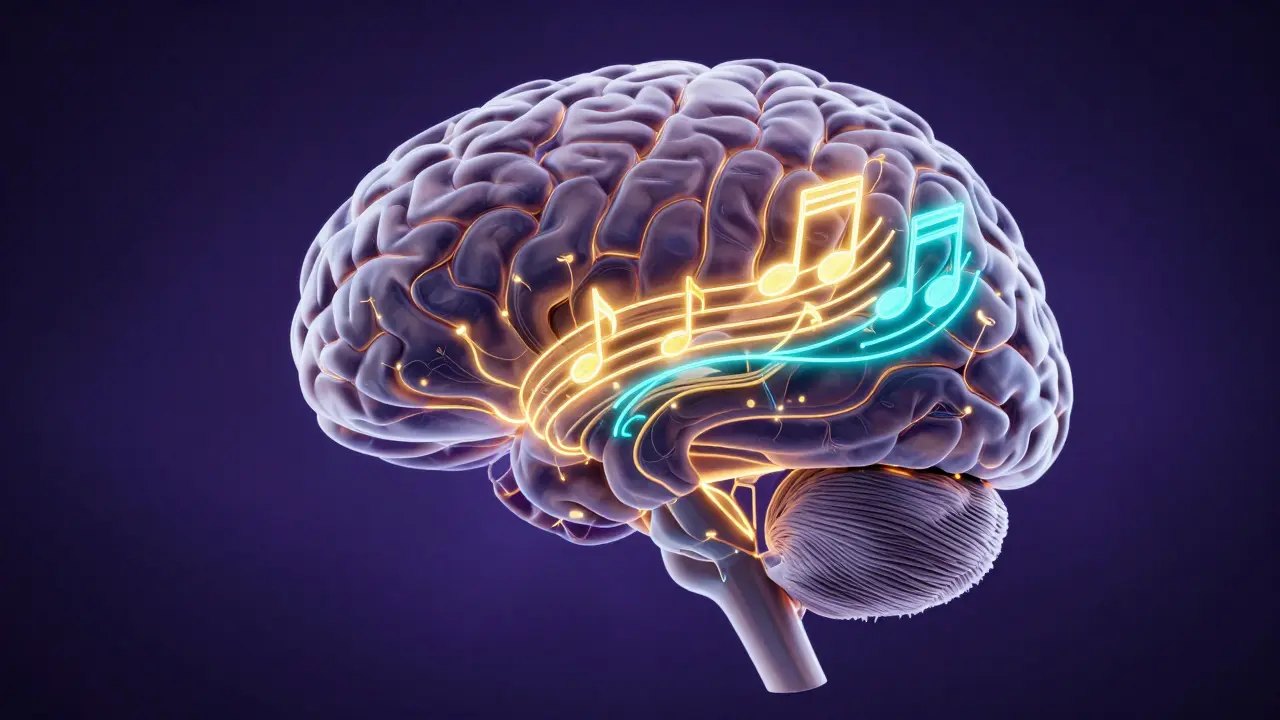
These therapies aren't just "feel-good" activities; they are grounded in neuroscience. When we engage in creative acts, we stimulate the prefrontal cortex and the limbic system simultaneously. This allows us to bridge the gap between our rational thoughts and our emotional instincts. For example, the use of Somatic Experiencing techniques within arts therapies helps regulate the vagus nerve, shifting the body from a "fight or flight" state to a "rest and digest" state.
Moreover, the act of creating triggers the release of dopamine, the brain's reward chemical. This isn't just about pleasure; it's about motivation and neuroplasticity. By creating new patterns in art or movement, we are essentially carving new neural pathways in the brain, making it easier to move away from old, negative thought loops.
How to Get Started: A Practical Path
If you're feeling curious, you don't have to jump straight into a clinical setting. You can begin incorporating these principles into your own life to see what resonates.
- Intuitive Drawing: Set a timer for 10 minutes. Don't draw an object; draw a feeling. Use colors and shapes that match your current mood. Don't worry about the result-focus on the movement of the pen.
- Active Listening: Put on a piece of music you've never heard. Close your eyes and imagine where the sound is located in your body. Does the bass feel like a weight in your stomach? Does the melody feel like a lightness in your chest?
- Body Scanning: Stand still and notice where you are holding tension. Try to give that tension a movement. If your neck feels tight, how would that "tightness" move if it were a dance? Gently let it flow out of your body.
- Dialogue Journaling: Write a conversation between two parts of yourself-for example, the part that is scared and the part that is brave. This is a simplified version of drama therapy's role-play technique.
Avoiding Common Pitfalls
A big misconception is that you need talent. Please, leave your inner critic at the door. The moment you start worrying if your painting is "ugly" or your singing is "off-key," you've shifted from the emotional brain back to the critical, logical brain, which slows down the therapeutic process. The goal is expression, not excellence.
Another mistake is using these tools to avoid the hard work of processing. Creative arts are a gateway, not the destination. The real healing happens during the reflection phase-when you look at what you've created and ask, "Why did I choose this color?" or "Why did my body react this way to that sound?" Without the guided reflection of a certified therapist, you're practicing a creative hobby; with it, you're engaging in therapy.
Do I need to be artistic to try creative arts therapies?
Absolutely not. These therapies are not about producing art for a gallery; they are about the process of creation. Whether you can't draw a straight line or can't carry a tune, the tools are designed to help you express emotions, not to improve your technical skills.
How do I know if I should choose art, music, or dance therapy?
It usually depends on how you naturally process emotion. If you're visual and prefer solitude, art therapy is a great start. If you're sensitive to sound or love rhythm, music therapy might fit. If you feel "stuck" in your head and need to move your body to feel alive, dance movement therapy is likely the best choice.
Is this a replacement for traditional talk therapy?
It can be, but it's often most effective as a complement. Some people find that arts therapies unlock emotions that they can then process more effectively in talk therapy. Others find that the arts provide the only safe way to access their trauma without becoming overwhelmed.
How long does it take to see results?
Unlike medication, the timeline varies. Some people feel an immediate sense of relief (catharsis) after a single session of drumming or painting. However, deep self-discovery and behavioral change usually happen over several months of consistent practice.
Where can I find a certified creative arts therapist?
Look for professionals certified by recognized boards, such as the American Art Therapy Association (AATA) or the World Federation for Music Therapy. Ensure they have a degree in the specific therapeutic modality and are licensed in your region.
Next Steps for Your Journey
If you're feeling called toward this path, start small. You don't need a full studio or a piano. Grab a piece of scrap paper and a pen, or put on a song that makes you feel something deep in your gut. The goal is to stop thinking about your life and start feeling it through a medium.
For those dealing with severe trauma or acute mental health crises, it's best to seek a licensed professional first. They can provide the containment and safety needed to ensure that the emotions unleashed through art don't become overwhelming. Once you have that safety net, the creative process can become the most powerful tool for self-discovery you've ever used.