
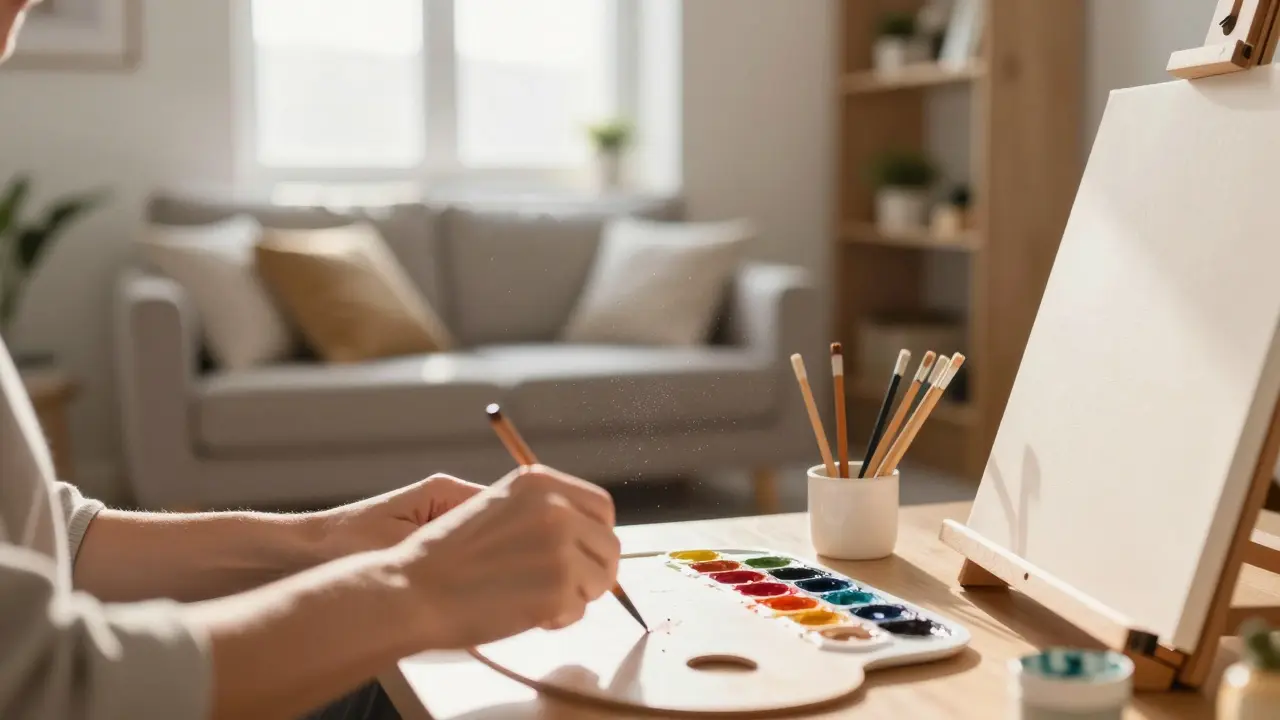
Have you ever stared at a blank canvas and felt your anxiety melt away? Or maybe humming a tune helped you process grief when words failed you? You are not alone. Millions of people find that traditional talk therapy isn't enough to reach the deepest parts of their emotional struggles. This is where Creative Arts Therapies come in. They offer a powerful alternative for healing by using artistic expression instead of just conversation.
In Australia, including here in Adelaide, mental health awareness is growing rapidly. People are looking for holistic approaches that address the whole person, not just symptoms. Creative arts therapies combine psychology with the arts-visual art, music, dance, drama, and poetry-to help individuals express themselves, manage stress, and heal from trauma. It’s not about being 'good' at art; it’s about what the art reveals.
What Exactly Are Creative Arts Therapies?
At its core, creative arts therapy is a clinical practice that uses the creative process to improve mental and emotional well-being. Unlike casual hobby groups, these sessions are led by licensed professionals who understand both psychology and the specific art form. The goal isn’t to create a masterpiece for a gallery. The goal is to use the medium as a tool for exploration and change.
There are five main modalities under this umbrella:
- Art Therapy: Uses drawing, painting, and sculpting to visualize feelings.
- Music Therapy: Uses rhythm, melody, and songwriting to regulate mood and memory.
- Dance/Movement Therapy: Connects body movement to emotional states.
- Drama Therapy: Uses role-play and storytelling to explore different perspectives.
- Poetry Therapy: Uses reading and writing poetry to gain insight and catharsis.
These disciplines often overlap. A therapist might use music to calm a client before they begin painting, or use drama to act out a scenario discussed during movement therapy. This integrative approach is known as Expressive Arts Therapy, which leverages multiple senses to unlock deeper layers of the psyche.
Why Words Sometimes Fail Us
Traditional psychotherapy relies heavily on verbal communication. But what happens when the trauma is too painful to speak about? Or when a child lacks the vocabulary to describe their fear? This is the primary advantage of creative arts therapies. The brain processes non-verbal information differently than language. When you engage in creative expression, you bypass the logical, defensive parts of the mind (the prefrontal cortex) and access the emotional centers (the limbic system) directly.
For survivors of severe trauma, speaking can sometimes re-traumatize them. Creating a mask in art therapy allows them to project their pain onto an object. They can then discuss the mask, creating a safe distance between themselves and their emotions. This concept, called Projective Identification, is a cornerstone of many therapeutic models.
Research supports this. Studies published in journals like the Journal of the American Art Therapy Association show that creative interventions can reduce cortisol levels (the stress hormone) more effectively than relaxation techniques alone. In 2024, a meta-analysis confirmed that music therapy significantly reduces anxiety in hospital settings, outperforming standard care protocols.
The Science Behind the Creativity
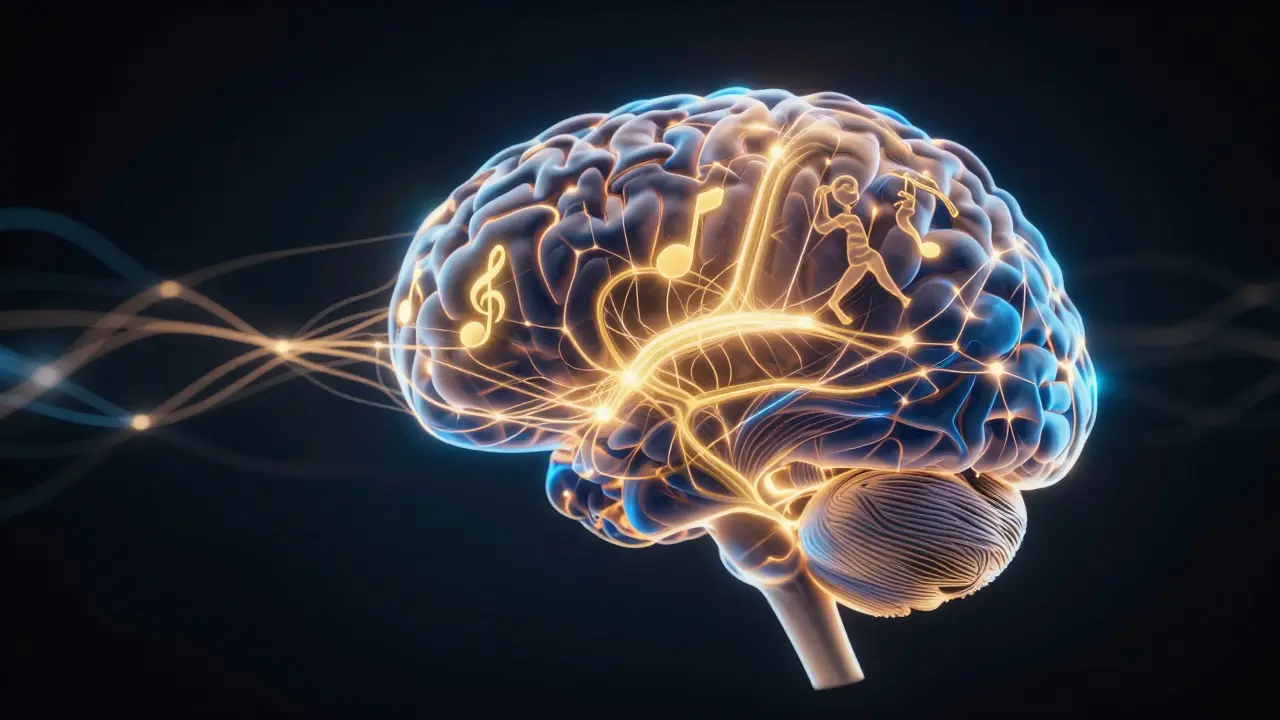
It’s easy to dismiss art therapy as 'just coloring,' but neuroscience tells a different story. Engaging in creative activities stimulates neuroplasticity-the brain's ability to rewire itself. When you paint or play an instrument, multiple areas of the brain light up simultaneously. This integration helps bridge gaps caused by dissociation or depression.
Consider the role of Neuroaesthetics. This field studies how our brains respond to beauty and creativity. Research shows that engaging with art releases dopamine, the neurotransmitter associated with pleasure and reward. For someone suffering from depression, where dopamine levels are often low, this natural boost can be a crucial first step toward feeling better.
Furthermore, rhythmic activities in dance and music therapy help regulate the autonomic nervous system. If you’ve ever noticed how drumming can make your heart rate sync with the beat, you’ve experienced entrainment. Therapists use this to help clients move from a state of high alert (fight or flight) to a state of safety and connection.
| Modality | Primary Tool | Best For | Key Benefit |
|---|---|---|---|
| Art Therapy | Paint, clay, charcoal | Visualizing abstract emotions | Tangible representation of inner world |
| Music Therapy | Instruments, voice, listening | Mood regulation, memory recall | Non-verbal emotional release |
| Dance/Movement | Body motion, space | Somatic trauma, body image issues | Reconnecting mind and body |
| Drama Therapy | Role-play, masks, scripts | Social skills, perspective-taking | Safe experimentation with identity |
Who Can Benefit from These Therapies?
Creative arts therapies are incredibly versatile. They are used across the lifespan and for a wide variety of conditions. Here are some common scenarios where these therapies shine:
Children and Adolescents: Kids often don’t have the cognitive maturity to articulate complex feelings. Play-based art therapy allows them to work through bullying, family divorce, or school anxiety in a way that feels natural to them. In schools across South Australia, art programs have been linked to improved behavioral outcomes.
Trauma Survivors: As mentioned earlier, trauma lives in the body. Dance/movement therapy and somatic experiencing techniques help survivors reclaim ownership of their bodies. It’s not about forcing movement, but about finding small, safe ways to express agency.
Elderly and Dementia Patients: Music therapy is particularly effective for dementia. Even when verbal memory fades, musical memory often remains intact. Singing old songs can trigger vivid memories and improve social interaction among residents in aged care facilities.
Mental Health Conditions: People dealing with depression, anxiety, PTSD, and schizophrenia often find relief through structured creative sessions. It provides a routine, a sense of accomplishment, and a new way to cope with intrusive thoughts.
Finding a Qualified Practitioner in Australia
If you’re interested in trying creative arts therapy, it’s important to find a qualified professional. In Australia, there are several peak bodies that accredit practitioners:
- Australian Art Therapy Association (AATA): Accredits art therapists.
- Australian Music Therapy Association (AMTA): Registers music therapists.
- Dance Movement Therapy Association of Australia (DMTAA): Certifies dance therapists.
When searching for a therapist, check if they are members of one of these organizations. This ensures they have undergone rigorous training, including supervised clinical hours. Many private health insurance providers in Australia now cover creative arts therapies under 'clinical psychology' or 'counselling' extras, so it’s worth checking your policy.
In Adelaide, you’ll find a growing network of practitioners offering both individual and group sessions. Some hospitals, like the Women’s and Children’s Hospital, integrate these therapies into their pediatric departments. Community centers also often host low-cost workshops.

Getting Started: What to Expect in Your First Session
Many people feel intimidated by the idea of 'making art' in a therapeutic setting. Don’t worry. You do not need any prior experience. Your therapist will provide all the materials and guide you through simple exercises.
- Assessment: The first session usually involves a conversation about your goals and history. The therapist may ask you to choose a color or draw a simple line to gauge your comfort level.
- Creation: You’ll engage in a creative activity. This could be free-form painting, playing a drum, or moving to music. There is no right or wrong way to do this.
- Reflection: After the activity, you’ll discuss what you created or experienced. The therapist might ask, "What does this shape remind you of?" or "How did your body feel while dancing?"
- Integration: Together, you’ll connect the creative experience to your daily life. How can you use this sense of calm or expression outside the session?
Remember, the focus is on the process, not the product. You won’t be judged on your artistic skill. In fact, many therapists encourage 'messy' or imperfect creations because they often reveal more authentic emotions.
Challenges and Limitations
While creative arts therapies are powerful, they aren’t a magic cure-all. They work best when combined with other treatments, such as medication or traditional counseling. Also, not every therapist is trained in every modality. It’s crucial to match the therapy type to your specific needs.
Another challenge is accessibility. While costs are decreasing, private sessions can still be expensive. However, community arts programs and university clinics often offer sliding-scale fees. Additionally, some people may initially resist creative activities due to past negative experiences with art classes in school. A good therapist will respect these boundaries and start with less intimidating mediums, like journaling or simple movement.
The Future of Healing Through Art
As we move further into the 2020s, the integration of creative arts therapies into mainstream healthcare is accelerating. Digital tools are also expanding access. Telehealth platforms now allow for virtual art and music therapy sessions, making help available to those in remote areas of Australia.
Moreover, research continues to validate the efficacy of these methods. We are seeing more large-scale studies proving that creative engagement improves quality of life for chronic illness patients. This evidence is pushing policymakers to include these therapies in public health funding models.
Whether you are struggling with acute trauma or simply seeking a deeper connection to yourself, creative arts therapies offer a unique path to healing. They remind us that we are not just thinkers, but feelers, movers, and creators. And sometimes, that’s exactly what we need to set ourselves free.
Is creative arts therapy covered by Medicare in Australia?
Currently, Medicare does not directly rebates creative arts therapies as a standalone service under the Better Access initiative. However, if you have a Mental Health Treatment Plan from your GP, you may be able to claim rebates for sessions with a psychologist who incorporates creative techniques, or for allied health services if the therapist is registered with relevant professional bodies and meets specific criteria. Always check with your provider and Medicare directly for the latest updates.
Do I need to be artistic to benefit from art therapy?
Absolutely not. Art therapy is not about producing beautiful artwork. It is about the process of creation and what it reveals about your inner state. Therapists are trained to look beyond technical skill and focus on the symbolic meaning and emotional expression within the work. Anyone can participate, regardless of age or ability.
How long does a typical creative arts therapy session last?
Most individual sessions last between 50 to 60 minutes. Group sessions may run longer, typically 90 minutes to two hours, to allow time for sharing and processing among participants. The frequency of sessions depends on your needs and goals, ranging from weekly to monthly.
Can children undergo creative arts therapy?
Yes, children are excellent candidates for creative arts therapy. Since children naturally communicate through play and art, these modalities align perfectly with their developmental stage. It is particularly effective for helping kids process trauma, anxiety, ADHD, and behavioral issues without the pressure of verbal articulation.
What is the difference between a hobby group and therapy?
The key difference lies in the intent and leadership. Hobby groups focus on skill-building and social enjoyment, led by instructors. Therapy focuses on psychological healing and personal growth, led by licensed mental health professionals. In therapy, the art is a tool for diagnosis and treatment, not just recreation.