
Most people set health goals with good intentions-lose weight, sleep better, exercise more-but by February, those goals are already forgotten. Why? Because they weren’t goals at all. They were wishes. Real health goals don’t live in your head. They live in your calendar, your kitchen, your workout clothes. And they work when they’re specific, tied to your life, and built to last.
Why Most Health Goals Fail
Let’s be honest: if your goal is "get healthier," you’ve already lost. That’s not a goal. It’s a feeling. A vague hope. A Pinterest quote. Studies show that 80% of New Year’s health resolutions fail by February. Not because people lack willpower. But because they didn’t design goals that match how humans actually change.
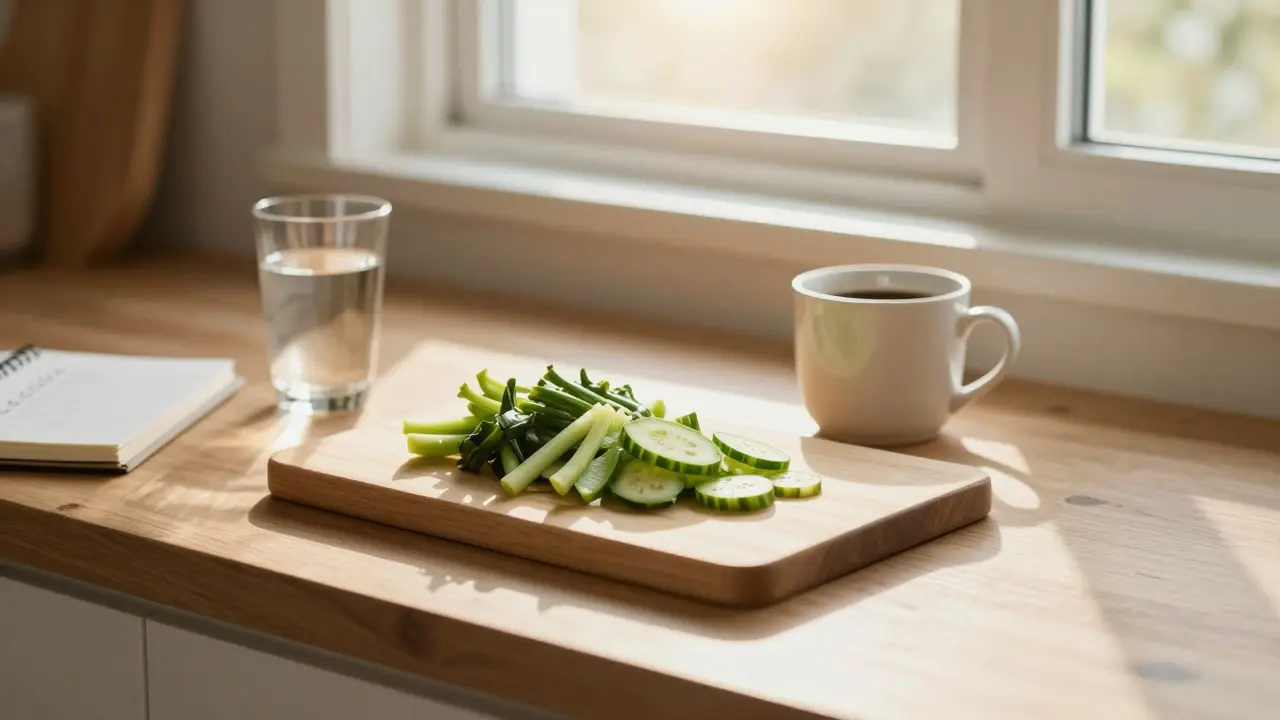
Think about it. You don’t wake up one day and suddenly start cooking healthy meals because you "want to be healthy." You start cooking healthy meals because you put chopped veggies in your fridge on Sunday, set a 6 p.m. alarm to start dinner, and kept a simple log of what you ate for three days straight. Small actions. Repeated. That’s how habits form.
Goals that fail are usually too big, too vague, or disconnected from your daily reality. Want to run a marathon? Great. But if you haven’t run more than a block in five years, that goal isn’t motivating-it’s intimidating. And when you feel overwhelmed, your brain shuts down. It doesn’t fight. It quits.
How to Set Health Goals That Stick
Here’s the simple formula that works: Specific + Small + Supported.
Specific means no fluff. Instead of "I want to eat better," say: "I will eat at least two servings of vegetables with dinner, Monday through Friday." That’s measurable. You can check it off. You know exactly what success looks like.
Small means starting so easy you can’t say no. Want to move more? Start with a five-minute walk after lunch. Not 30 minutes. Not a gym membership. Five minutes. On days you feel great, you might walk 20. But on days you’re tired? You still did five. That’s consistency. That’s progress.
Supported means building systems, not relying on motivation. Motivation fades. Systems don’t. Put your running shoes by the door. Prep your lunch the night before. Download a free app that reminds you to drink water. Make the right choice the easiest choice.
One woman I know wanted to lower her blood pressure. Instead of saying "I’ll eat less salt," she started by swapping out one processed snack a week for an apple. She did that for four weeks. Then she added a second swap. Within six months, her doctor noticed the change without her even mentioning it. She didn’t overhaul her life. She just changed one tiny thing, again and again.
Start With One Goal-Not Five
It’s tempting to tackle everything at once: sleep, diet, movement, stress, hydration. But trying to change five things at once is like trying to juggle five flaming torches. You’re not going to look impressive. You’re going to get burned.
Choose one. Just one. Pick the area that matters most to you right now. Is it energy? Sleep? Mood? Digestion? Pick the one that, if improved, would make the biggest difference in your daily life.
Here’s how to pick:
- Look at your week. What drains you the most?
- What do you wish you had more of? (Time? Energy? Calm?)
- What’s something you’ve tried before and almost succeeded at?
For example, if you’re always tired by 3 p.m., your goal might be: "I will drink a full glass of water when I wake up and another at 10 a.m." That’s it. No caffeine swaps. No meal plans. Just water. After two weeks, you might add a 10-minute walk after lunch. One step. Then another.
Track Progress-But Don’t Obsess
Tracking isn’t about perfection. It’s about awareness. You don’t need a fancy app. A notebook. A sticky note on your mirror. A checkmark on your phone calendar. Whatever’s simple and doesn’t feel like a chore.
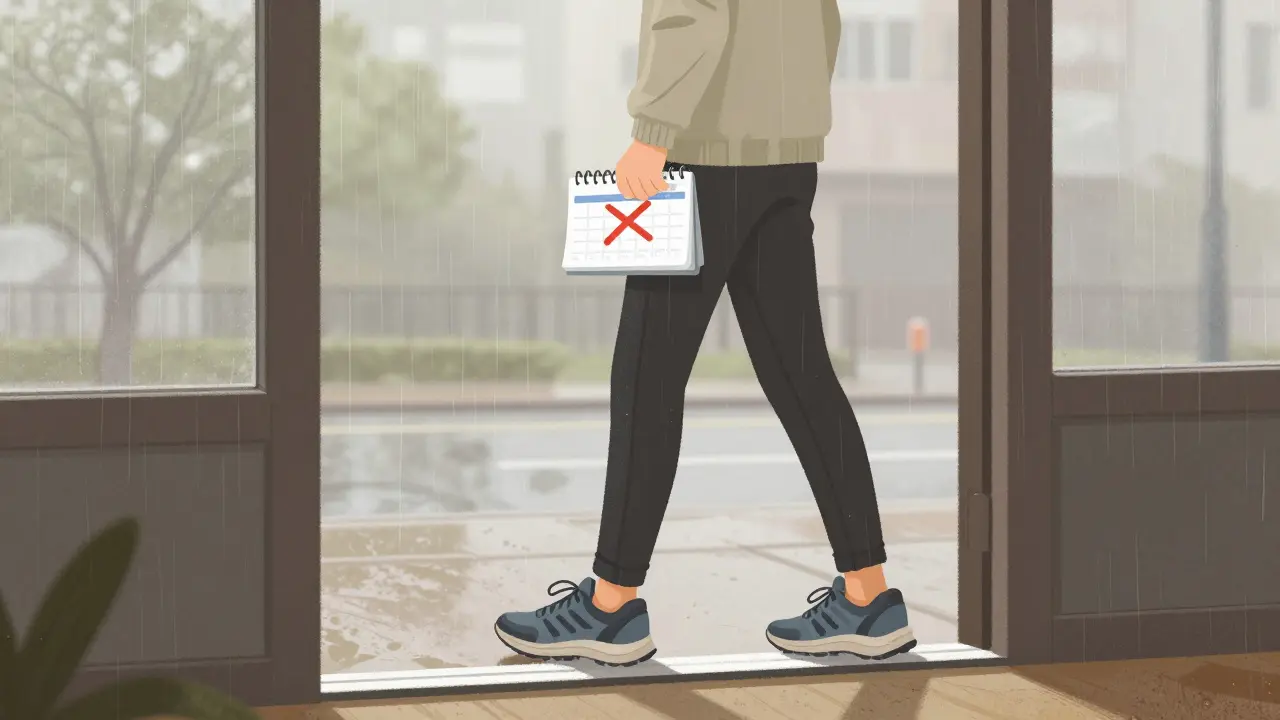
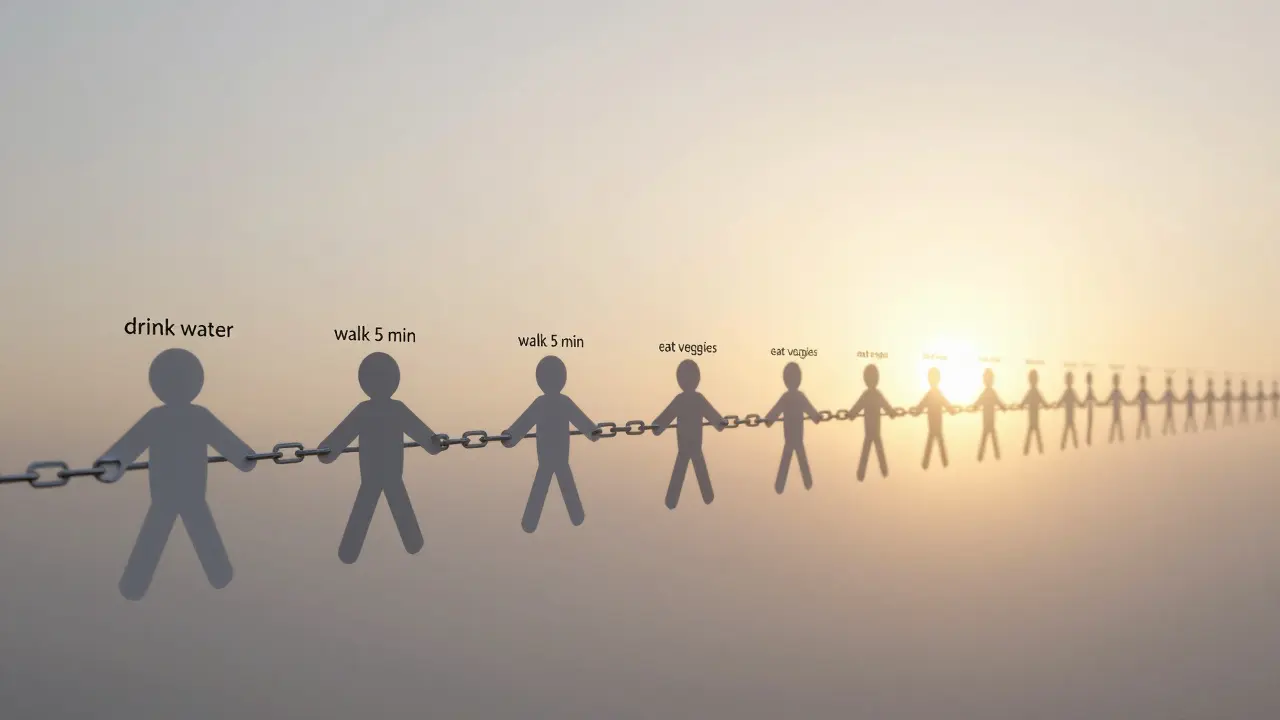
Here’s what works: mark an X on a calendar for every day you hit your goal. Don’t worry about missing a day. Just keep going. The chain matters more than perfection. Albert Einstein once said, "It’s not that I’m so smart, it’s just that I stay with problems longer." Same with health goals. Showing up matters more than being perfect.
Some people track weight. Others track mood, sleep hours, or how many times they moved their body. Pick one metric that reflects your goal. Not five. One. And check it weekly-not daily. Daily tracking turns into obsession. Weekly tracking turns into insight.
What to Do When You Slip Up
You’ll miss a day. Or two. Or a week. That’s not failure. That’s data.
When you slip, don’t ask: "Why did I fail?" Ask: "What got in the way?"
Did you skip your walk because you were working late? Then maybe your goal needs to move to the morning. Did you eat junk food because you were stressed? Then your goal might need a stress-management companion-like five deep breaths before eating.
Slips aren’t setbacks. They’re clues. They tell you where your system is weak. Fix the system, not yourself.
One man I worked with kept skipping his morning stretch because his alarm went off while he was still half-asleep. He moved the alarm to the other side of the room. Now he has to get up to turn it off. He’s done it every morning for eight months. No willpower needed. Just a better setup.
Health Goals Aren’t About Perfection-They’re About Progress
Health isn’t a destination. It’s a rhythm. A daily practice. A way of showing up for yourself, even on the days you don’t feel like it.
Setting health goals isn’t about becoming someone else. It’s about becoming more of who you already are-stronger, calmer, more alive. You don’t need to run a marathon to be healthy. You just need to move your body, eat real food, rest enough, and keep going.
The most powerful health goal you can set is this: "I will keep trying." Not tomorrow. Not next week. Today. Right now. What’s one small thing you can do today that moves you forward? Do that. Then do it again tomorrow. That’s how real change happens.
Examples of Real Health Goals That Work
Here are a few proven goals people actually stuck with:
- "I will eat breakfast with protein every morning-eggs, yogurt, or peanut butter on toast."
- "I will turn off all screens one hour before bed and read a book instead."
- "I will take the stairs instead of the elevator three times a week."
- "I will drink a full glass of water before every meal."
- "I will walk outside for 15 minutes after lunch, rain or shine."
Notice anything? None of these require a gym membership. None require willpower. They’re all tiny, doable, and tied to existing routines. That’s the secret.
What Comes After You Hit Your Goal?
When you hit your goal, don’t stop. Upgrade it.
Did you walk every day for a month? Try adding five minutes. Did you drink water before every meal? Try adding one vegetable to lunch. Progress isn’t about checking boxes. It’s about building momentum.
And then? Pick your next goal. Not five. One. Keep going. That’s how health becomes a habit. Not a resolution. Not a trend. A way of life.