
Your gut is more than just a place where food gets broken down. It’s a busy city of trillions of bacteria, viruses, and fungi - all working together to digest your meals, support your immune system, and even influence your mood. When this system gets out of balance, you might feel bloated, tired, or even anxious. The good news? You don’t need expensive supplements or clinic visits to fix it. Simple, everyday changes at home can make a real difference.
Start with fiber - but not just any fiber
Fiber is the fuel your good gut bacteria need to thrive. But not all fiber is the same. Soluble fiber, found in oats, apples, and beans, turns into a gel in your gut and feeds beneficial microbes. Insoluble fiber, like in whole grains and vegetables, helps things move through smoothly. Most people get enough insoluble fiber but miss out on soluble.
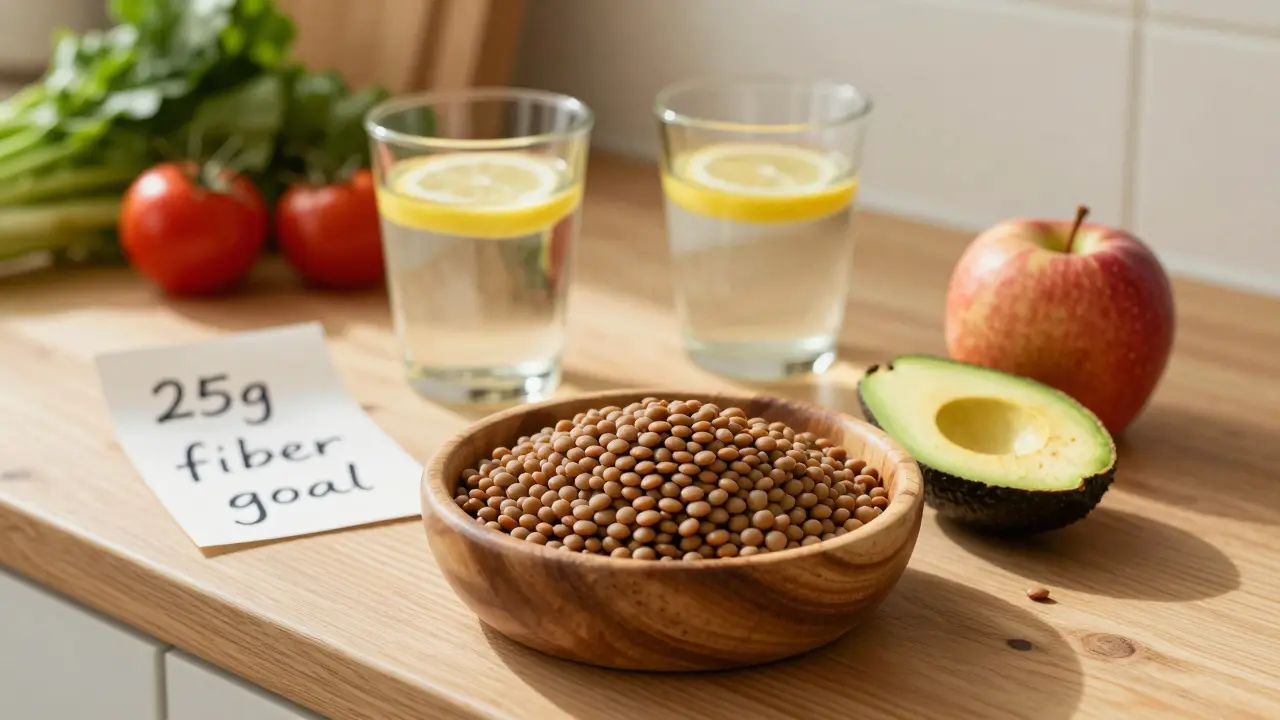
Try adding one extra serving of soluble fiber each day. A cup of cooked lentils gives you 15 grams. Half an avocado adds 5 grams. One apple with the skin on? About 4 grams. That’s 24 grams right there - close to the daily target of 25-30 grams most adults need. Skip the fiber supplements unless your doctor recommends them. Whole foods work better because they come with vitamins, minerals, and plant compounds that supplements can’t copy.
Eat fermented foods - regularly
Fermented foods are packed with live bacteria that can help repopulate your gut. Think yogurt with live cultures, kefir, sauerkraut, kimchi, miso, and kombucha. These aren’t just trendy snacks - they’ve been used for centuries to preserve food and support digestion.
Start small. A tablespoon of sauerkraut with your lunch, or a small glass of unsweetened kombucha in the afternoon, is enough. Too much too fast can cause bloating, especially if your gut isn’t used to it. Look for products labeled “live and active cultures” or “unpasteurized.” Pasteurization kills the good bacteria. Avoid flavored yogurts with added sugar - they’re often worse than soda for your gut.
A 2023 study from Stanford University found that people who ate six servings of fermented foods a week for four weeks had reduced markers of inflammation and more diverse gut bacteria. That’s not magic. That’s consistency.
Drink more water - not less
Water keeps everything moving. Without enough, stool becomes hard and slow, which lets bad bacteria linger longer in your colon. It also makes fiber less effective. Fiber needs water to swell and do its job.
Most adults need about 2-3 liters a day, depending on activity and climate. If you’re in Perth and it’s 30°C outside, you need more. A simple trick: drink a glass of water first thing in the morning, and another before every meal. That’s three glasses before you even think about lunch. Add a slice of lemon or cucumber if you like the taste. Avoid sugary drinks and artificial sweeteners - they can feed bad bacteria and mess with your gut lining.

Sleep like your gut depends on it - because it does
Your gut has its own rhythm. It slows down at night and kicks into gear during the day. When you sleep poorly, that rhythm gets thrown off. Studies show that people with insomnia have less diverse gut bacteria and higher levels of inflammation.
You don’t need to sleep eight hours perfectly. Just aim for consistent sleep and wake times. Even on weekends. Go to bed 15 minutes earlier than usual. Turn off screens an hour before bed. Light from phones tricks your brain into thinking it’s daytime, which messes with melatonin - the hormone that also helps regulate gut function.
Try reading a book under dim light instead. Or listen to a calm podcast. Your gut will thank you more than you expect.
Move your body - gently
You don’t need to run a marathon to help your gut. Even a 20-minute walk after meals improves digestion. Movement helps food move through your intestines faster, reducing bloating and gas. It also lowers stress hormones like cortisol, which can irritate your gut lining.
Try walking after dinner. It doesn’t have to be fast. Just slow and steady. If you sit at a desk all day, set a timer to stand up and stretch every hour. Even two minutes of gentle twisting or marching in place helps. Yoga poses like child’s pose or seated spinal twists are especially good for releasing trapped gas.
Reduce processed foods - not all at once
Ultra-processed foods - think chips, packaged snacks, frozen meals, sugary cereals - are full of additives, preservatives, and unhealthy fats. These things don’t just make you gain weight. They change your gut bacteria in ways that promote inflammation and leaky gut.
You don’t have to quit them cold turkey. Start by swapping one processed item a week for a whole-food version. Replace sugary cereal with oats and berries. Swap packaged crackers for sliced veggies and hummus. Choose plain yogurt over flavored. Small swaps add up. After a month, you’ll notice less bloating and more steady energy.

Manage stress - it’s a gut issue too
The gut and brain are connected by the vagus nerve. When you’re stressed, your gut slows down. Digestion gets messy. You might get cramps, diarrhea, or constipation. Chronic stress can even change the types of bacteria living in your gut.
Deep breathing for just five minutes a day can help. Try this: breathe in slowly through your nose for four counts, hold for four, breathe out through your mouth for six. Repeat five times. Do it when you wake up, before bed, or when you feel tense. It signals your body to calm down - and your gut follows.
Journaling for 10 minutes before bed also helps. Write down what’s bothering you, or just list three things you’re grateful for. You’re not solving your problems - you’re giving your nervous system a break.
Give it time - and track progress
Improving gut health isn’t a 7-day challenge. It’s a 30-day habit shift. You won’t feel better overnight. But after three weeks, most people notice less bloating, more regular bowel movements, and clearer skin. Some even say their anxiety has eased.
Keep a simple journal. Note what you ate, how you slept, your stress level, and how your belly felt that day. After a month, look back. What foods made you feel better? What days were worse? Patterns will show up. That’s your personal gut map.
Don’t chase quick fixes. No single superfood or supplement will fix everything. It’s the combination - fiber, fermented foods, water, sleep, movement, less junk, and less stress - that works.
When to see a doctor
Most gut discomfort can be fixed at home. But if you have persistent diarrhea, blood in your stool, unexplained weight loss, or severe pain, don’t wait. These aren’t normal. See a doctor. You might need tests for conditions like IBS, SIBO, or Crohn’s disease. Home fixes help - but they don’t replace medical care when it’s needed.
Can probiotic supplements replace fermented foods?
Not really. Probiotic supplements contain specific strains of bacteria, often in small amounts. Fermented foods offer a wider variety of live microbes, plus prebiotics and nutrients that help those bacteria survive and thrive. Supplements can help in some cases - like after antibiotics - but for daily gut health, food is more effective and better studied.
Is coffee bad for gut health?
Coffee isn’t bad for most people. In fact, it can stimulate bowel movements and contains polyphenols that feed good bacteria. But if you have IBS or acid reflux, it might irritate your gut. Try switching to half-caf or drinking it after a meal. Avoid adding sugar or artificial creamers - those are the real culprits.
Does alcohol ruin your gut?
Yes, especially in excess. Alcohol damages the gut lining, increases inflammation, and kills off good bacteria. Even moderate drinking (more than one drink a day for women, two for men) can disrupt your microbiome. If you’re trying to heal your gut, cut back or take a break for 30 days. You’ll likely notice less bloating and better sleep.
Can I improve my gut health if I’m vegan or vegetarian?
Absolutely. Plant-based diets are rich in fiber and polyphenols - both great for gut bacteria. Focus on diverse sources: legumes, whole grains, nuts, seeds, vegetables, and fermented options like tempeh, miso, and kimchi. Make sure you’re getting enough zinc and vitamin B12 - these are harder to get on plant-based diets and can affect gut function if low.
How long until I feel better?
Most people notice small improvements in 2-3 weeks - less bloating, better digestion. Major changes, like reduced inflammation or improved mood, often take 6-8 weeks. The key is consistency. One day of junk food won’t undo progress, but daily small choices will build it.