
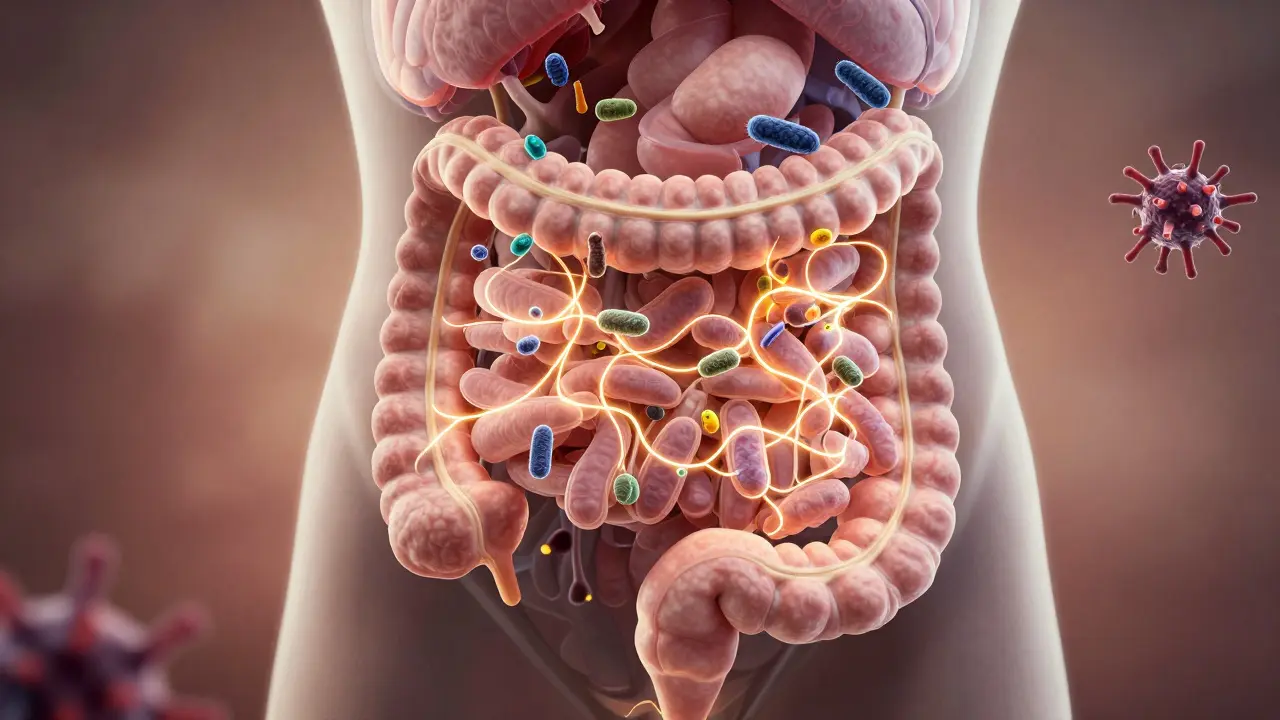
Every time you eat, sneeze, or even just breathe, your body is making a silent trade-off: keep the good stuff in, and keep the bad stuff out. That balance isn’t just happening in your lungs or skin-it’s happening deep inside your gut. And what’s going on in there might be the biggest factor in whether you get sick or stay well.
What Your Gut Really Is
Your gut isn’t just a tube that digests food. It’s home to trillions of bacteria, viruses, fungi, and other microbes-collectively called the microbiome a complex community of microorganisms living in the digestive tract that influence digestion, metabolism, and immune function. This isn’t just passive baggage. These microbes are active players in your health. They help break down fiber, produce vitamins like B12 and K, and even send signals to your brain.
But here’s the key: about 70% of your immune system lives in your gut. Not in your bone marrow or lymph nodes. Right there, wrapped around your intestines, are clusters of immune cells called GALT-gut-associated lymphoid tissue. These cells are constantly scanning what’s passing through your digestive tract. They decide what to ignore, what to tolerate, and what to attack.
How the Gut Talks to the Immune System
It’s not a one-way conversation. Your gut microbes produce short-chain fatty acids like butyrate when they ferment fiber. Butyrate doesn’t just feed your gut lining-it tells immune cells to calm down. It reduces inflammation. It helps regulate T-cells, the body’s peacekeepers that prevent autoimmune reactions.
At the same time, if your gut lining gets damaged-say, from too much sugar, alcohol, or chronic stress-it becomes leaky. That’s called intestinal permeability a condition where the tight junctions between gut cells loosen, allowing undigested food particles and toxins to enter the bloodstream. When that happens, your immune system sees these particles as invaders. It goes on high alert. Chronic inflammation follows. And over time, that can lead to allergies, eczema, even autoimmune diseases like rheumatoid arthritis or Hashimoto’s thyroiditis.
What Kills Your Gut Microbes
Not all microbes are created equal. Some are helpful. Others? Not so much. And modern life is full of things that wipe out the good ones.
- Antibiotics-even a single course can wipe out 30% of your gut bacteria, and some species never fully recover.
- Processed foods-high in sugar, refined carbs, and artificial additives that feed harmful bacteria and fungi like Candida.
- Chronic stress-when your body’s in fight-or-flight mode, blood flow to the gut drops. Digestion slows. The gut lining weakens.
- Lack of sleep-studies show poor sleep alters microbial diversity within just 48 hours.
- Low-fiber diets-most people in Western countries eat less than 15 grams of fiber a day. Experts recommend 25-38 grams. Without fiber, your good bacteria starve.
A 2023 study from the University of Melbourne tracked 1,200 adults over two years. Those who ate at least five different plant-based foods per week had 40% more microbial diversity than those who ate fewer than three. Higher diversity? Stronger immune responses. Fewer colds. Faster recovery.

What Builds a Strong Gut
It’s not about fancy supplements or expensive probiotics. It’s about daily habits.
- Eat the rainbow-different colored fruits and veggies feed different microbes. Purple cabbage, orange carrots, green spinach-they all have unique fibers and polyphenols.
- Include fermented foods-yogurt with live cultures, kimchi, sauerkraut, kefir, and miso introduce beneficial bacteria naturally. One study found people who ate fermented foods daily had lower levels of inflammatory markers than those who didn’t.
- Don’t fear fat-healthy fats from olive oil, avocados, nuts, and fatty fish reduce gut inflammation and support the gut lining.
- Move your body-even 30 minutes of walking five days a week increases microbial diversity. Exercise boosts anti-inflammatory compounds in the gut.
- Rest your gut-give yourself 12 hours between dinner and breakfast. That fasting window lets your gut repair itself and reset its microbial balance.
The Connection to Common Illnesses
Think about how often you get sick. Colds. Flu. Sinus infections. If you’re catching every bug going around, your gut might be the missing piece.
Researchers at Stanford found that people with low gut microbial diversity were more likely to develop severe respiratory infections. Their immune systems were overworked, stuck in a constant state of low-grade inflammation. Meanwhile, those with rich, diverse microbiomes responded faster to vaccines and recovered quicker.
Even chronic conditions like asthma, eczema, and type 1 diabetes are linked to early-life gut imbalances. Babies born via C-section, for example, miss out on the mother’s vaginal microbiome during birth. Studies show they have a higher risk of immune-related disorders-until they’re given probiotics or breastfed.

When to See a Professional
Not everyone needs a gut test. But if you’ve tried improving your diet and still deal with:
- Chronic bloating or gas
- Food intolerances that keep coming back
- Unexplained fatigue
- Autoimmune symptoms
- Recurrent infections
it’s worth talking to a registered dietitian or functional medicine practitioner. They can look at your history, run targeted tests (like stool analysis or SIBO breath tests), and help you rebuild your gut without guessing.
Real-Life Example: From Sickly to Strong
Take Maria, a 34-year-old teacher from Melbourne. She’d been sick every winter since her teens. Antibiotics for ear infections as a kid, then constant colds, then seasonal allergies. She tried antihistamines. Nothing stuck.
She started eating three servings of vegetables daily, added sauerkraut to her lunch, cut out sugary snacks, and began walking after dinner. Within six weeks, her sinus congestion cleared. By four months, she hadn’t caught a cold once. Her allergy meds? Gone. Her doctor said her immune markers had improved dramatically.
It wasn’t magic. It was microbiome repair.
Final Thought: Your Gut Is Your First Line of Defense
You can’t control every germ you encounter. But you can control what happens inside your gut. The food you eat, the stress you carry, the sleep you miss-these aren’t just lifestyle choices. They’re immune system decisions.
Your gut isn’t just about digestion. It’s about survival. And if you want to stay healthy, you don’t need to take a dozen supplements. You just need to feed your microbes well.
Can probiotic supplements improve immunity?
Probiotic supplements can help, but they’re not a magic bullet. Most store-bought probiotics contain only a few strains, and many don’t survive stomach acid. Fermented foods like kimchi, kefir, and yogurt naturally deliver a wider variety of live bacteria and are often more effective. If you do take a supplement, look for ones with at least 10 billion CFUs and strains like Lactobacillus rhamnosus or Bifidobacterium longum-these have the most research backing for immune support.
Does fasting help gut health?
Yes, intermittent fasting gives your gut a break. During fasting, your gut lining repairs itself, and beneficial bacteria that thrive on low-sugar environments get a chance to multiply. A 12-hour overnight fast (like finishing dinner at 7 p.m. and eating again at 7 a.m.) is enough to trigger this repair cycle. Longer fasts aren’t necessary for most people and can backfire if done improperly.
Can antibiotics permanently damage gut health?
Antibiotics can cause major disruptions, but permanent damage is rare. Most people recover their microbial balance within 3-6 months, especially if they eat a fiber-rich diet afterward. However, repeated antibiotic use, especially in childhood, can reduce microbial diversity long-term. That’s why it’s critical to use antibiotics only when truly necessary and to support gut recovery with prebiotics and fermented foods afterward.
Is there a link between gut health and mental health?
Yes. The gut and brain communicate through the vagus nerve. Gut microbes produce over 90% of the body’s serotonin-the mood-regulating chemical. Studies show people with depression and anxiety often have less diverse gut microbiomes. Improving gut health through diet can reduce symptoms of anxiety and improve emotional resilience, even without medication.
How long does it take to improve gut health?
You can start seeing changes in as little as 3-7 days. Swapping sugary snacks for fruit or adding one serving of fermented food can shift your microbial activity quickly. But building lasting diversity and immune resilience takes consistent habits over 3-6 months. Think of it like building muscle-you don’t get strong after one workout.
Want to know what’s next? Try tracking your food and symptoms for a week. Notice how you feel after eating bread versus eating lentils. That’s your gut talking. Listen.