
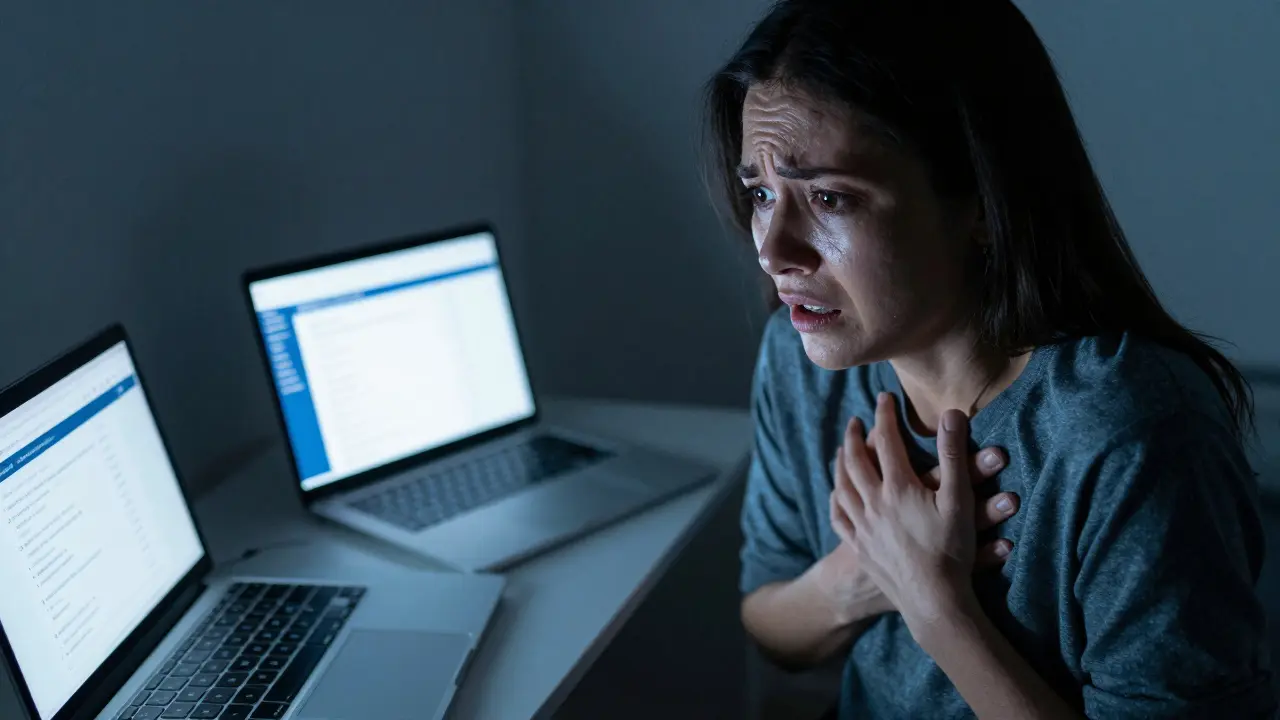
Ever checked your pulse three times in five minutes because your chest felt funny? Or spent an hour scrolling through medical sites after a headache, convinced you have a brain tumor? You’re not broken. You’re not crazy. You’re caught in the grip of health anxiety - and most of what you’ve been told about it is wrong.
Myth 1: Health Anxiety Is Just Being Worrying Too Much
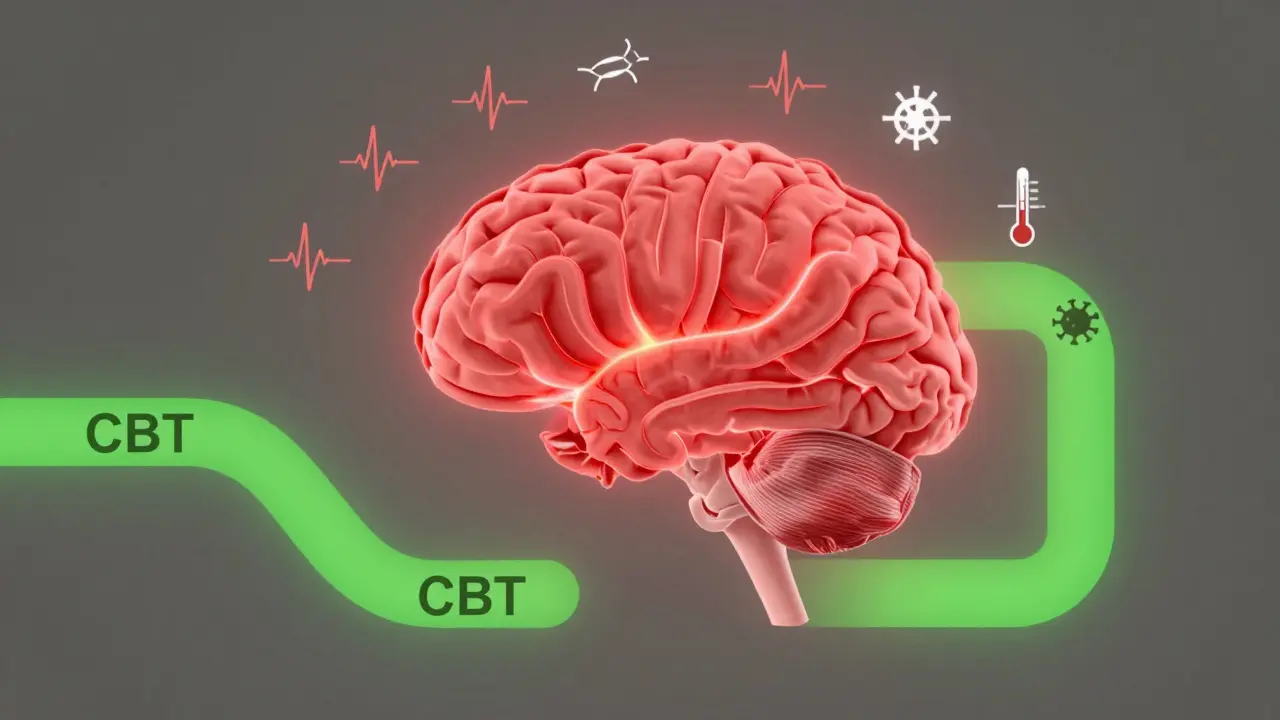
People say, “Just stop worrying,” like it’s a light switch. But health anxiety isn’t overthinking. It’s a neurological loop. Your brain’s alarm system - the amygdala - gets stuck on high alert. A normal heartbeat? That’s a heart attack. A sore throat? That’s throat cancer. It’s not irrational fear. It’s a misfiring signal. A 2023 study in the Journal of Anxiety Disorders found that people with health anxiety show 47% more activity in brain regions linked to threat detection than those without it. This isn’t about being dramatic. It’s biology.
Myth 2: It’s the Same as Hypochondria
You’ll hear the word “hypochondria” thrown around like it’s a punchline. But that term was officially retired in 2013 by the American Psychiatric Association. What we now call illness anxiety disorder is a clinical diagnosis with specific criteria: persistent fear of illness despite medical reassurance, high levels of anxiety about health, and behaviors like excessive checking or avoidance. Calling it hypochondria dismisses the real suffering. It’s not about being silly. It’s about a brain that can’t turn off the danger signal - even when scans come back clean.
Myth 3: More Tests Will Make You Feel Better
Doctors often order extra tests to reassure patients. But here’s the truth: each negative result only buys you a few days of relief. Then the fear creeps back. Why? Because health anxiety isn’t about the absence of disease - it’s about the presence of uncertainty. A 2022 meta-analysis in The Lancet Psychiatry showed that people with illness anxiety disorder who got repeated imaging and blood work had no long-term reduction in anxiety. In fact, their symptoms worsened over time. Why? Each test reinforces the idea that something *could* be wrong. It turns your body into a crime scene you’re constantly investigating.
Myth 4: You Just Need to “Think Positive” or “Be Grateful”
Telling someone with health anxiety to “focus on the good things” is like telling someone with a broken leg to “just walk it off.” Positive thinking doesn’t rewire a brain stuck in survival mode. This kind of advice makes people feel guilty for feeling anxious. It adds shame on top of fear. The real fix isn’t mindset - it’s exposure. Cognitive behavioral therapy (CBT) for health anxiety doesn’t ask you to believe you’re healthy. It asks you to sit with the discomfort of not knowing. To notice the chest tightness without jumping to cancer. To let the headache exist without googling “brain tumor symptoms.” That’s the work. And it’s hard.
Myth 5: Only Nervous or Overly Sensitive People Get It
I’ve worked with lawyers, nurses, engineers - people who are sharp, calm, and logical in every other part of life. One client, a 42-year-old ER nurse, had a panic attack every time her own blood pressure spiked. She knew the numbers weren’t dangerous. She’d seen hundreds of patients with the same readings. But her body didn’t care. Health anxiety doesn’t pick based on personality. It picks based on sensitivity. People with this condition often have a nervous system that’s more reactive to internal cues - a trait that might have helped our ancestors survive predators. Now, it just makes them hyper-aware of every burp, twitch, or itch.
Myth 6: Medication Is the Only Real Solution
SSRIs like sertraline or escitalopram are commonly prescribed - and they can help. But they’re not magic pills. A 2024 review in JAMA Psychiatry found that while medication reduced symptoms in 58% of patients, only 31% achieved full remission. The real game-changer? Combining medication with CBT. The combination worked for 74% of patients. But here’s what no one tells you: you don’t need to be on medication forever. Many people taper off after 6-12 months of therapy, once they’ve learned how to manage the anxiety without relying on reassurance or avoidance.
Myth 7: You’re Alone in This
One in 20 adults will meet the criteria for illness anxiety disorder in their lifetime. That’s 5%. And most of them suffer in silence. They avoid doctors because they fear being labeled “crazy.” They skip social events because they’re too focused on their symptoms. They lie to loved ones about how bad it is. But you’re not the only one. Online forums are full of people who describe the exact same thoughts - the same dread, the same rituals, the same exhaustion. You’re not weak. You’re not broken. You’re just caught in a system that doesn’t understand how anxiety works.

What Actually Helps - And What Doesn’t
Here’s what works:
- CBT with exposure and response prevention: This is the gold standard. You learn to tolerate uncertainty without checking, Googling, or asking for reassurance.
- Acceptance and Commitment Therapy (ACT): Instead of fighting the fear, you learn to carry it. Like carrying a heavy backpack - you don’t drop it, but you stop letting it stop you from walking.
- Reducing safety behaviors: No more checking your temperature. No more asking, “Does this look like a rash?” No more Googling symptoms at 2 a.m.
Here’s what doesn’t:
- Reassurance from doctors, friends, or family - it gives short-term relief but reinforces the cycle.
- Medical scans for no clinical reason - they feed the fear, not cure it.
- Supplements, crystals, or “energy healing” - they don’t address the root cause.
What to Do Right Now
If you recognize yourself here, start small:
- Write down your worst fear: “I think I have cancer.”
- Then write: “What’s the evidence for that? What’s the evidence against it?”
- Next time you feel the urge to check, wait 10 minutes. Set a timer. Do something else - wash dishes, call a friend, walk around the block.
- Stop Googling. Use a browser extension like StayFocusd to block medical sites during high-anxiety hours.
- Find a therapist who specializes in health anxiety. Not just any CBT therapist - one who knows how to handle reassurance-seeking behaviors.
Recovery isn’t about becoming fearless. It’s about becoming less controlled by fear. You can learn to live with uncertainty. You can learn to hear your body without interpreting every signal as a crisis. It takes time. It takes practice. But it’s possible.
You’re Not Broken - You’re Wired Too Well
Your body is trying to protect you. It’s just doing it too well. Health anxiety isn’t a flaw. It’s a misfired survival mechanism. And like any system, it can be recalibrated. You don’t need to be cured. You need to be understood. And you’re not alone.
Is health anxiety the same as being a hypochondriac?
No. The term “hypochondriac” is outdated and stigmatizing. Health anxiety is now clinically called illness anxiety disorder, a recognized mental health condition with specific diagnostic criteria. It’s not about being overly dramatic - it’s about a brain that misinterprets normal bodily sensations as signs of serious illness.
Can health anxiety cause real physical symptoms?
Yes. Anxiety triggers the stress response - increased heart rate, muscle tension, dizziness, stomach upset, tingling. These aren’t imaginary. They’re real physiological reactions. But they’re not signs of disease. They’re signs of anxiety. The body doesn’t distinguish between a lion chasing you and a worried thought about cancer.
How long does it take to recover from health anxiety?
Most people see improvement within 8-12 weeks of consistent CBT. Full recovery - meaning you no longer let anxiety control your life - can take 6-12 months. Progress isn’t linear. Some days will feel harder. That’s normal. The goal isn’t to never feel anxious again - it’s to stop letting anxiety dictate your choices.
Should I stop seeing my doctor if I have health anxiety?
No. But you should set boundaries. Work with your doctor to create a plan: one check-up per year unless new, specific symptoms appear. Avoid “just checking” for reassurance. A good doctor will understand and support your recovery by not reinforcing the anxiety cycle with unnecessary tests.
Can health anxiety go away on its own?
Sometimes, yes - especially if life stressors decrease. But without treatment, it often becomes chronic. The longer you avoid facing the fear, the stronger it gets. Treatment doesn’t mean you’re weak - it means you’re choosing to reclaim your life.