
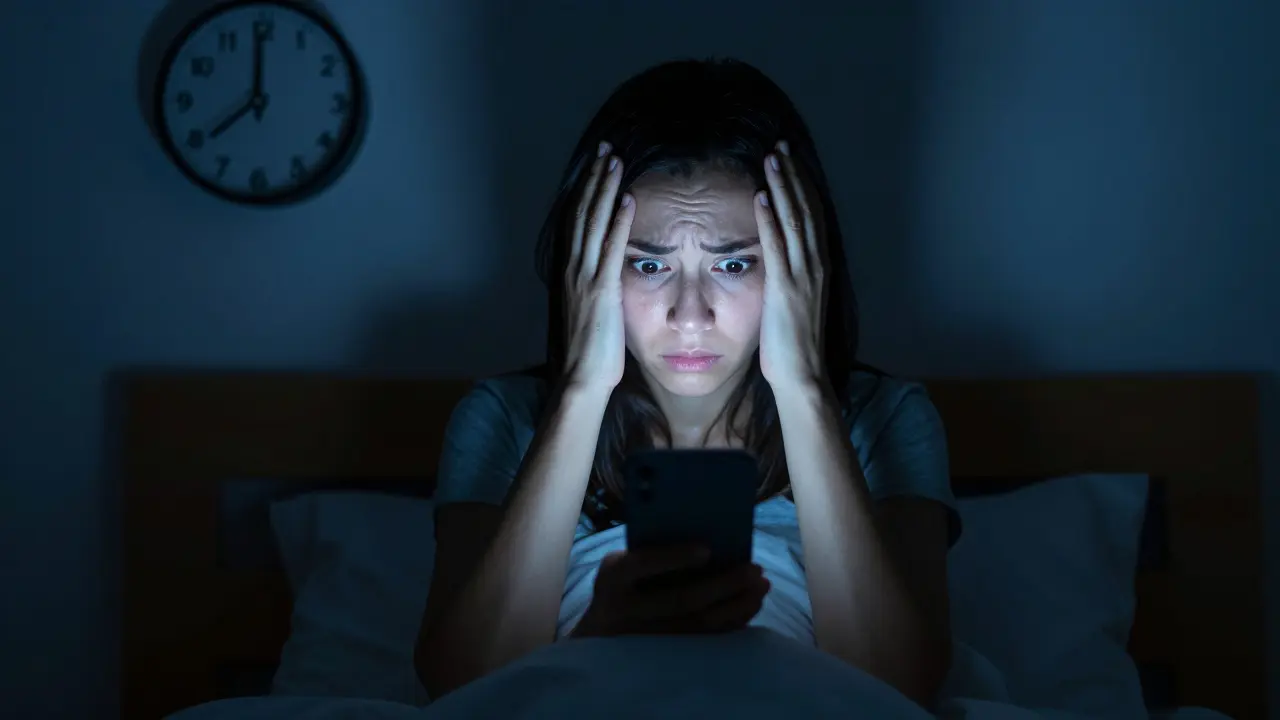
Most people worry about their health now and then. A headache becomes a brain tumor. A cough turns into lung cancer. But for people with health anxiety, these fears don’t fade after a Google search or a doctor’s reassurance. They grow. They loop. They take over.
Health anxiety isn’t just being cautious. It’s a persistent, overwhelming fear that you’re seriously ill-even when medical tests say otherwise. It’s checking your pulse three times a day. It’s rereading symptom lists until your hands shake. It’s avoiding hospitals because you’re terrified of catching something, or rushing to them because you’re sure you’re dying. And it’s far more common than most realize.
What Health Anxiety Really Looks Like
Imagine waking up with a slight chest tightness. Most people shrug it off. Someone with health anxiety? They spend the next 48 hours researching rare heart conditions, calling their GP, and scrolling through forums where others describe the exact same feeling. They don’t sleep. They cancel plans. They start avoiding caffeine, exercise, even laughter-anything that might raise their heart rate.
This isn’t hypochondria as a punchline. It’s a real, diagnosable condition called Illness Anxiety Disorder (IAD), recognized in the DSM-5. People with IAD either:
- Have no physical symptoms but are convinced they’re sick (anxiety-focused)
- Have mild symptoms but interpret them as catastrophic (somatic symptom-focused)
Studies show about 4-6% of the general population meets the criteria. That’s 1 in every 20 people. In primary care settings? Up to 25% of patients show signs of health anxiety. Yet most never get diagnosed because they don’t see it as a mental health issue-they think they’re just being careful.
Why It’s So Hard to Break the Cycle
The more you search, the worse it gets. That’s not a myth-it’s science. Every time you look up symptoms, your brain learns: searching = safety. So you search more. The more you search, the more you find scary matches. The more matches you find, the more terrified you become. It’s a feedback loop designed to trap you.
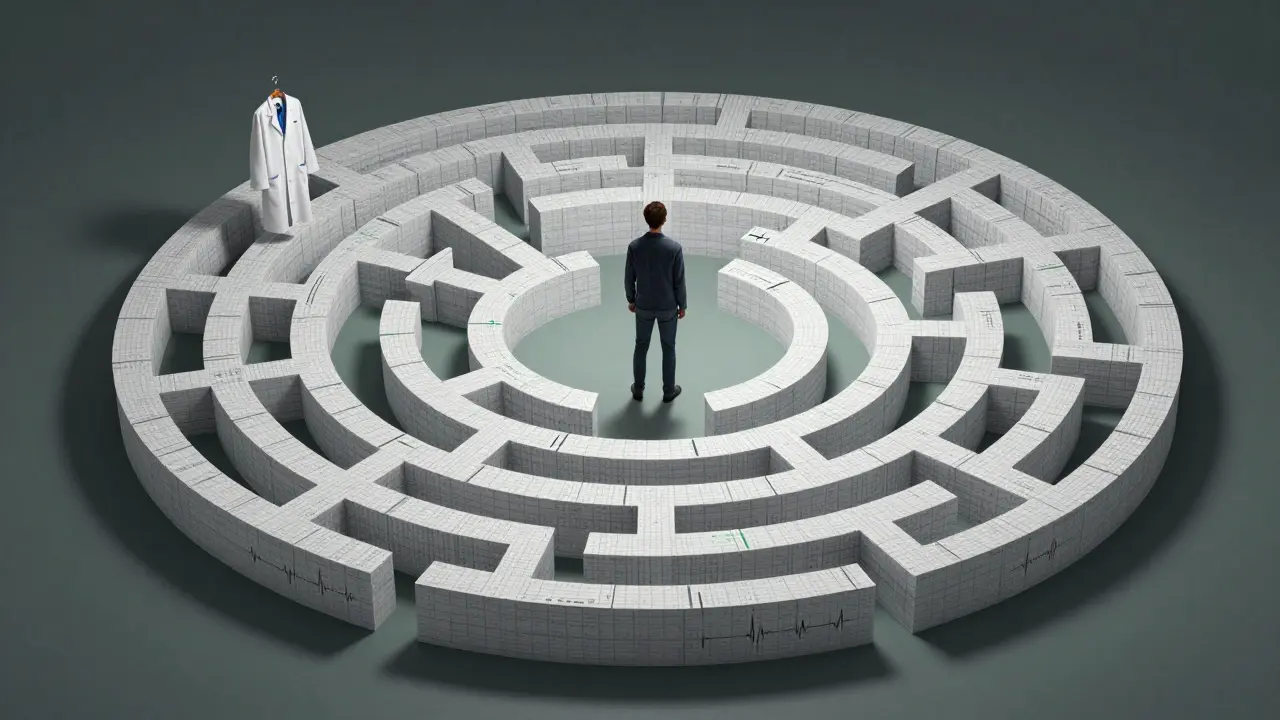
Doctors often make it worse. A patient says, “I’m scared I have cancer.” The doctor runs a test. The result is normal. The patient feels relieved… for a few days. Then the symptom returns. Or a new one shows up. And the cycle restarts. The patient thinks, “They didn’t check deep enough.” So they go back. And again. And again.
One 2023 study in the Journal of Anxiety Disorders tracked 187 patients with health anxiety over 12 months. Those who visited their GP more than four times for the same concern had a 60% higher chance of developing severe anxiety. Reassurance doesn’t help-it fuels the fire.
Physical Symptoms Are Real-Even If the Cause Isn’t
People with health anxiety aren’t faking it. Their symptoms are real. Muscle tension. Dizziness. Heart palpitations. Numbness. Fatigue. These come from the body’s stress response. When you’re anxious, your nervous system stays on high alert. Adrenaline spikes. Blood vessels constrict. Muscles tighten. Your body is reacting to fear-not cancer, not MS, not a tumor.
Think of it like a smoke alarm that goes off every time you burn toast. The alarm isn’t broken. But it’s overreacting. You don’t fix it by turning it off. You fix it by teaching it that toast smoke isn’t a fire.
That’s what treatment looks like: retraining your brain to stop interpreting normal bodily sensations as emergencies.
What Actually Helps-And What Doesn’t
Medication? SSRIs like sertraline or escitalopram can help. But they’re not magic. They work best when paired with therapy.
Therapy? Cognitive Behavioral Therapy (CBT) is the gold standard. It doesn’t tell you to stop worrying. It teaches you to notice the worry, pause, and ask: “Is this thought helping me? Or is it trapping me?” You learn to sit with discomfort instead of fleeing from it.
Here’s what doesn’t work:
- Repeated medical tests (they reinforce the fear)
- Online symptom checkers (they’re designed to scare you)
- Asking friends for reassurance (they get tired, you get more anxious)
- Ignoring the anxiety (it grows louder)
What does work?
- Setting limits on checking symptoms (e.g., once a day, max)
- Delaying doctor visits unless symptoms are new and severe
- Practicing mindfulness to notice bodily sensations without reacting
- Reducing caffeine and alcohol (they mimic anxiety symptoms)
- Keeping a journal to track triggers-not symptoms
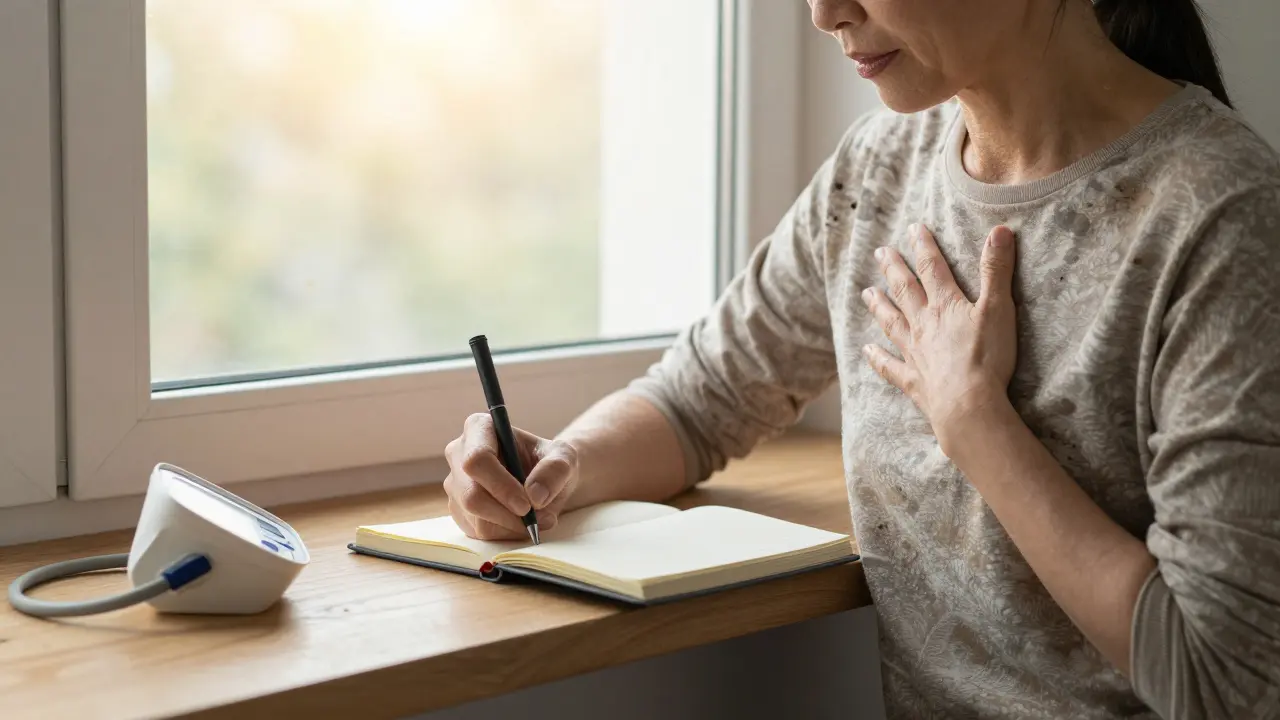
One woman in Brisbane, 42, stopped checking her blood pressure for 30 days. She wrote down what she was feeling emotionally instead: “Worried about my mom’s health,” “Felt lonely after work,” “Tense after scrolling news.” Within weeks, her physical symptoms dropped by 70%. She wasn’t cured-but she finally saw the link.
The Hidden Cost of Health Anxiety
It’s not just about stress. It’s about money, time, relationships, and life.
People with health anxiety spend 3-5 times more on healthcare than others. They miss work. They avoid travel. They turn down promotions because they’re afraid of the stress. Some stop dating because they’re terrified of being alone if they get sick. Others isolate themselves because friends don’t understand.
And the loneliness? That’s the silent killer. Many with health anxiety feel ashamed. They think they’re being dramatic. Weak. Overreacting. So they stay quiet. And the anxiety grows in the dark.
When to Seek Help
You don’t need to be in crisis to get help. If any of this sounds familiar:
- You spend more than an hour a day worrying about your health
- You’ve had multiple normal test results but still feel unwell
- You avoid doctors or medical settings out of fear
- Your relationships or work are suffering because of health fears
Then it’s time to talk to a mental health professional-not just a GP. Look for someone trained in CBT for health anxiety. It’s not about dismissing your concerns. It’s about freeing you from their grip.
Breaking the Pattern Starts With One Step
You don’t have to stop worrying overnight. You don’t have to stop Googling tomorrow. But you can start noticing.
Next time you feel a twinge in your chest, pause. Ask yourself:
- What was I thinking about right before this sensation?
- Am I reacting to my body-or to my fear?
- Will checking this again in 10 minutes change anything?
That pause? That’s the crack in the wall. And from there, you can start rebuilding.