
Most of us wake up in a rush. We grab something quick-maybe a plain bagel or a bowl of sugary cereal-and head out the door. It’s convenient, sure, but it leaves your body running on empty. You might feel sluggish by mid-morning, or worse, you’re missing out on a crucial nutrient that keeps your digestive system humming: dietary fiber, which is a type of carbohydrate found in plant foods that aids digestion and helps regulate blood sugar levels. Getting enough fiber isn’t just about avoiding constipation. It’s about feeding the good bacteria in your gut, keeping your heart healthy, and staying full longer so you don’t snack mindlessly at 10 AM. The problem? Most standard breakfasts are shockingly low in fiber. That’s why shifting your morning routine to include high-fiber options is one of the easiest, most impactful changes you can make for your long-term health. You don’t need to spend hours in the kitchen or eat bland food to get those numbers up. With a few simple swaps and some tasty recipes, you can easily hit the recommended daily intake of 25 grams for women and 38 grams for men (according to the Academy of Nutrition and Dietetics). Let’s look at how to build a breakfast that actually works for your body.
The Science Behind High-Fiber Mornings
Before we get to the recipes, it helps to understand what fiber actually does once it hits your stomach. There are two main types: soluble and insoluble. Soluble fiber dissolves in water to form a gel-like substance, which slows down digestion and helps lower cholesterol and blood sugar levels. Insoluble fiber adds bulk to your stool and helps food pass more quickly through your stomach and intestines. A balanced diet includes both.
Starting your day with fiber sets a positive tone for the rest of your meals. When you eat fiber-rich foods like oats, beans, or berries, you stabilize your energy levels. This prevents the sharp spikes and crashes associated with refined carbohydrates. Plus, fiber promotes satiety. If you’re full after breakfast, you’re less likely to overeat lunch. It’s a simple chain reaction that supports weight management and metabolic health without strict calorie counting.
- Soluble Fiber Sources: Oats, barley, apples, citrus fruits, carrots, peas, and beans.
- Insoluble Fiber Sources: Whole wheat flour, vegetables, nuts, seeds, and whole-grain bread.
Think of fiber as the broom that sweeps your digestive tract clean while also acting as fuel for your microbiome. Without it, that internal ecosystem suffers, leading to bloating, irregularity, and even mood swings due to the gut-brain axis connection.
Top High-Fiber Ingredients to Keep on Hand
To make these recipes work, you need the right building blocks. Here are the powerhouses I keep stocked in my Ottawa pantry during these chilly mornings.
| Ingredient | Serving Size | Fiber (grams) |
|---|---|---|
| Rolled Oats | 1/2 cup dry | 4g |
| Chia Seeds | 1 tbsp | 5g |
| Black Beans | 1/2 cup cooked | 7.5g |
| Raspberries | 1 cup | 8g |
| Almonds | 1 oz (23 nuts) | 3.5g |
| Whole Wheat Bread | 1 slice | 2-3g |
Notice how small portions of seeds and legumes pack a massive punch. Adding just one tablespoon of chia seeds to your yogurt can add nearly 20% of your daily fiber needs. These ingredients are versatile, affordable, and easy to incorporate into almost any meal style, whether you prefer sweet or savory.
Recipe 1: Overnight Chia Pudding with Berries
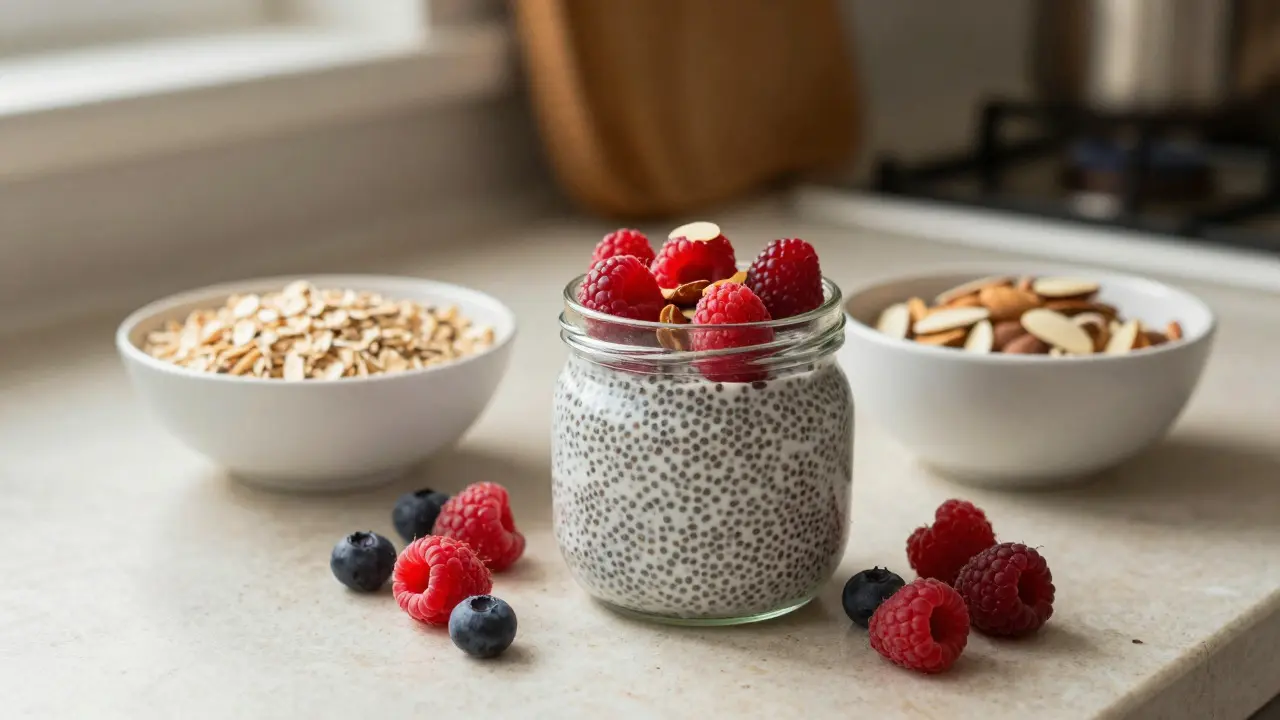
If you hate cooking in the morning, this is your best friend. Overnight oats and chia pudding are essentially the same concept: you mix things up the night before, let them sit in the fridge, and wake up to a ready-to-eat meal. This version is creamy, satisfying, and packed with antioxidants.
- Mix: In a jar or container, combine 3 tablespoons of chia seeds with 1 cup of unsweetened almond milk (or dairy milk if you prefer).
- Flavor: Add 1 teaspoon of vanilla extract and a dash of cinnamon. Stir well to prevent clumping.
- Rest: Cover and refrigerate overnight (or at least 4 hours). The chia seeds will absorb the liquid and thicken into a pudding-like consistency.
- Top: In the morning, top with 1/2 cup of fresh raspberries and a handful of sliced almonds.
This single serving delivers approximately 12-15 grams of fiber. The combination of chia seeds (soluble fiber) and almonds (insoluble fiber) ensures you’re getting a balanced dose. It’s portable too, making it perfect for grabbing on your commute.

Recipe 2: Savory Black Bean and Sweet Potato Hash
Who says breakfast has to be sweet? Legumes are often overlooked in morning meals, but they are fiber giants. This savory hash is hearty, warming, and incredibly filling. It’s particularly great during the colder months here in Canada.
- Prep: Dice one medium sweet potato into small cubes. Heat a tablespoon of olive oil in a skillet over medium heat.
- Cook: Sauté the sweet potatoes for 10-12 minutes until tender and slightly crispy. Add diced onions and bell peppers if you have them.
- Add Protein & Fiber: Stir in 1/2 cup of rinsed canned black beans and 1/4 cup of corn. Cook for another 2-3 minutes until heated through.
- Season: Season with cumin, chili powder, salt, and pepper. Top with a fried egg or avocado slices for extra creaminess.
This dish provides around 10-12 grams of fiber per serving. The sweet potato offers complex carbs and beta-carotene, while the black beans provide protein and significant fiber content. It’s a complete meal that will keep you energized until lunch.
Recipe 3: Whole Grain Smoothie Bowl
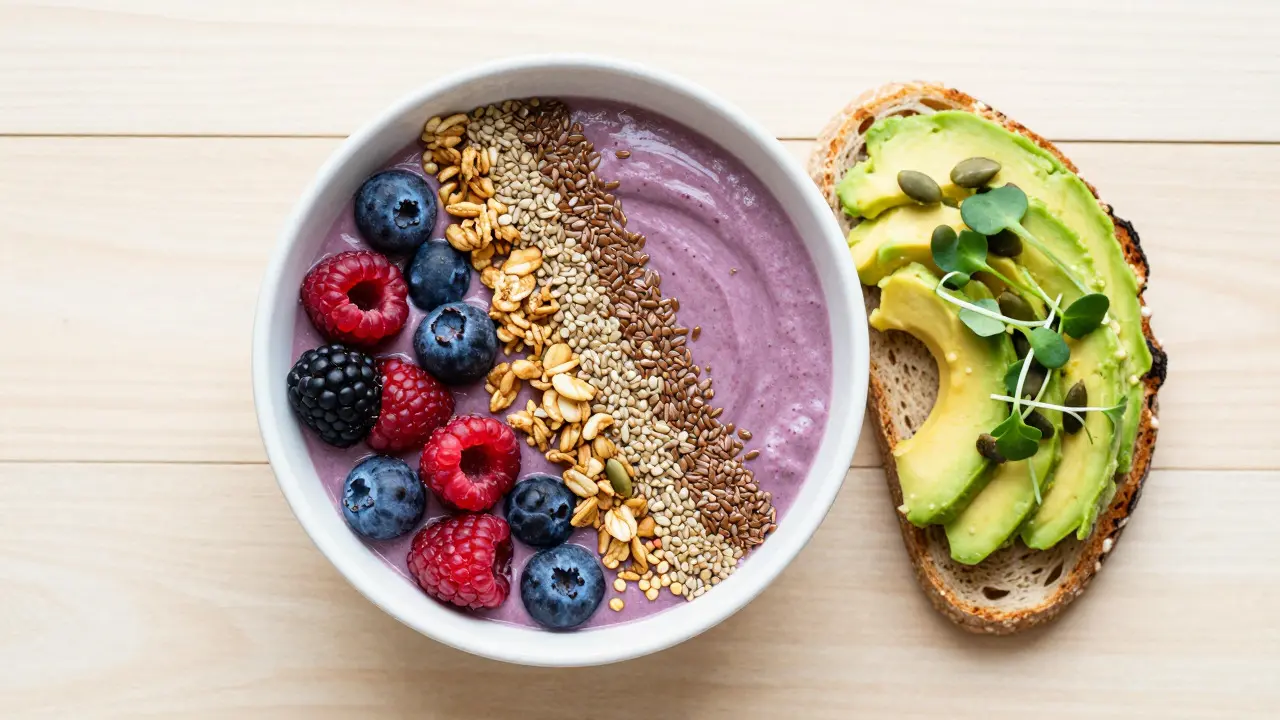
Smoothies are great, but blending everything can sometimes hide the texture and volume of fiber-rich foods. A smoothie bowl allows you to keep the thickness and add toppings that boost the fiber count further. Using frozen fruit keeps it cold without needing ice, which dilutes the flavor.
- Blend: Combine 1 cup of frozen mixed berries, 1/2 banana, 1/2 cup of Greek yogurt, and 1/2 cup of unsweetened soy milk in a blender. Blend until smooth.
- Thicken: If it’s too runny, add more frozen fruit or a spoonful of oatmeal.
- Assemble: Pour into a bowl. Top with 2 tablespoons of hemp hearts, 1 tablespoon of ground flaxseed, and a sprinkle of granola made from whole grains.
Hemp hearts and flaxseeds are nutritional powerhouses. Just two tablespoons of each can add nearly 6 grams of fiber to your bowl. The berries contribute another 4-5 grams. This recipe is rich in omega-3 fatty acids as well, supporting brain health alongside digestive wellness.
Recipe 4: High-Fiber Avocado Toast Upgrade
Avocado toast is trendy for a reason-it tastes good. But standard white bread toast offers little nutritional value beyond calories. By switching to 100% whole grain or sprouted grain bread, you transform this snack into a substantial meal.
- Toast: Toast two slices of dense whole grain bread. Look for brands that list "whole wheat" or "whole grain" as the first ingredient.
- Mash: Mash half an avocado with lemon juice, salt, and red pepper flakes.
- Layer: Spread the avocado generously on the toast. Top with a poached egg or smoked salmon.
- Boost: Sprinkle with pumpkin seeds (pepitas) and microgreens.
Pumpkin seeds are another hidden gem for fiber. One ounce contains about 5 grams of fiber. Combined with the whole grain bread (approx. 6g total for two slices) and the avocado (7g), this meal can easily exceed 15 grams of fiber. It’s savory, satisfying, and takes less than five minutes to prepare.
Tips for Increasing Fiber Intake Gradually
If you’re not used to eating high-fiber foods, jumping straight into these recipes might cause some bloating or gas. Your gut bacteria need time to adjust to the increased workload. Here’s how to transition smoothly:
- Drink More Water: Fiber absorbs water. If you increase fiber without increasing fluid intake, you risk constipation. Aim for at least 8 glasses of water a day.
- Go Slow: Add 5 grams of fiber to your diet each week rather than doubling your intake overnight.
- Vary Your Sources: Don’t rely on just one type of fiber. Rotate between oats, beans, nuts, fruits, and vegetables to ensure you get both soluble and insoluble types.
- Read Labels: Check nutrition facts on packaged goods. Many cereals claim to be "high fiber" but are loaded with added sugars. Opt for natural sources whenever possible.
Listening to your body is key. Mild discomfort is normal initially, but severe pain or persistent issues mean you should scale back and consult a healthcare provider. Remember, consistency beats intensity when it comes to dietary changes.
Common Mistakes to Avoid
Even well-intentioned efforts to eat healthier can go wrong. Here are a few pitfalls I see often:
Relying on Supplements: While fiber supplements like psyllium husk exist, they shouldn’t replace whole foods. Whole foods provide vitamins, minerals, and phytonutrients that supplements lack. Think of supplements as a backup, not a primary strategy.
Ignoring Portion Sizes: High-fiber foods are often calorie-dense, especially nuts and seeds. A handful of almonds is great; a whole bag is not. Measure your portions to avoid unintended weight gain.
Skipping Lunch: Because high-fiber breakfasts are so filling, some people skip the next meal. This can lead to overeating later. Stick to regular meal times to maintain stable blood sugar levels.
Final Thoughts on Morning Nutrition
Changing your breakfast habits doesn’t require a complete overhaul of your life. Small, consistent adjustments yield the best results. Swap your sugary cereal for overnight oats. Add beans to your eggs. Choose whole grain bread over white. These tiny shifts accumulate over time, leading to better digestion, sustained energy, and improved overall health.
Your body thrives on variety and quality. By prioritizing fiber-rich foods in the morning, you set yourself up for success throughout the day. Experiment with these recipes, find what you enjoy, and make it a routine. Your gut will thank you.
How much fiber should I aim for in my breakfast?
Aim for at least 10-15 grams of fiber in your breakfast. This represents a significant portion of the recommended daily intake of 25-38 grams and helps kickstart your digestive system for the day.
Can high-fiber breakfasts help with weight loss?
Yes. Fiber increases satiety, meaning you feel fuller for longer. This reduces the likelihood of snacking on high-calorie, low-nutrient foods later in the day, naturally supporting weight management goals.
What are the best sources of soluble fiber for breakfast?
Oats, chia seeds, flaxseeds, and berries are excellent sources of soluble fiber. These ingredients help lower cholesterol and regulate blood sugar levels effectively.
Why do I feel bloated after eating high-fiber foods?
Bloating is common when you suddenly increase fiber intake. Your gut bacteria need time to adapt. Increase fiber gradually over several weeks and ensure you drink plenty of water to mitigate this effect.
Is it okay to eat beans for breakfast?
Absolutely. Beans are a fantastic source of fiber and protein. They are commonly used in savory breakfast dishes like hashes and scrambles in many cultures worldwide.
Do I need to cook high-fiber foods to get their benefits?
No. Raw fruits, vegetables, nuts, and seeds retain their fiber content. Cooking can sometimes make fiber easier to digest for some people, but it is not required for absorption.
Can children eat high-fiber breakfasts?
Yes, but their fiber needs are lower than adults. Adjust portion sizes accordingly and introduce high-fiber foods gradually to avoid digestive discomfort in younger children.
What is the difference between soluble and insoluble fiber?
Soluble fiber dissolves in water to form a gel, helping lower cholesterol and blood sugar. Insoluble fiber adds bulk to stool and aids in regular bowel movements. Both are essential for optimal health.