

Gut Health Symptom Tracker
Daily Symptom Log
Your Gut Health Insights
Start tracking your daily habits to see patterns emerge.
Recent Entries
Most people think of gut health as something that only matters when they have stomach pain or bloating. But if you’ve ever felt sluggish after lunch, anxious for no reason, or had trouble sleeping even when you’re tired-you’re already feeling the effects of your gut. It’s not just about digestion. Your gut is running the show behind the scenes, influencing your mood, energy, immune response, and even how you think.
Your Gut Is a Second Brain
The gut doesn’t just break down food. It’s packed with over 100 million nerve cells-more than the spinal cord. This network, called the enteric nervous system, talks directly to your brain through the vagus nerve. That’s why stress can make you nauseous, and why a bad night’s sleep can wreck your digestion the next day. It’s a two-way street.
Studies show that people with chronic digestive issues like IBS are three times more likely to experience anxiety or depression. Not because they’re ‘imagining it’-but because the same imbalances in gut bacteria that cause bloating and cramps also affect serotonin production. About 90% of your body’s serotonin, the chemical linked to mood and calm, is made in the gut. If your gut flora is out of balance, your brain feels it.
What You Eat Changes How You Feel
Think of your gut as a garden. If you keep dumping sugar, processed snacks, and fried food on it, you’re growing weeds-harmful bacteria that trigger inflammation. Meanwhile, fiber-rich foods like oats, beans, broccoli, and apples feed the good bacteria. These good bugs don’t just help digestion-they produce short-chain fatty acids that reduce inflammation, strengthen your gut lining, and even help regulate blood sugar.
One 2023 study tracked 200 adults for six months. Those who swapped out ultra-processed foods for whole, plant-based meals saw a 40% drop in daily bloating, a 30% improvement in sleep quality, and reported feeling more focused at work. It wasn’t about weight loss. It was about gut balance.
Even small changes matter. Try replacing your morning sugary cereal with oatmeal topped with chia seeds and blueberries. Swap soda for sparkling water with lemon. You won’t notice a difference overnight, but in 3-4 weeks, you might find yourself less irritable after meals and more alert in the afternoon.
Stress Doesn’t Just Live in Your Mind
Chronic stress-whether from work, money, or relationships-doesn’t just make you tired. It physically changes your gut. When you’re stressed, your body shuts down non-essential functions, including digestion. Blood flow drops to your intestines, stomach acid production slows, and the protective mucus layer in your gut thins. This lets bad bacteria creep into places they shouldn’t be, triggering inflammation and leaky gut.
That’s why people who work long hours or have high-stress jobs often develop food sensitivities, acid reflux, or sudden constipation. The gut doesn’t care if your stress is ‘real’ or ‘just in your head.’ It reacts to the signal: cortisol rising, parasympathetic nervous system shutting down.
The fix isn’t just meditation (though that helps). It’s rhythm. Eating meals at the same time every day. Taking 5 minutes to breathe before lunch. Not checking emails while you eat. These aren’t luxury habits-they’re biological necessities if you want your gut to function.
Sleep, Gut Health, and the Vicious Cycle
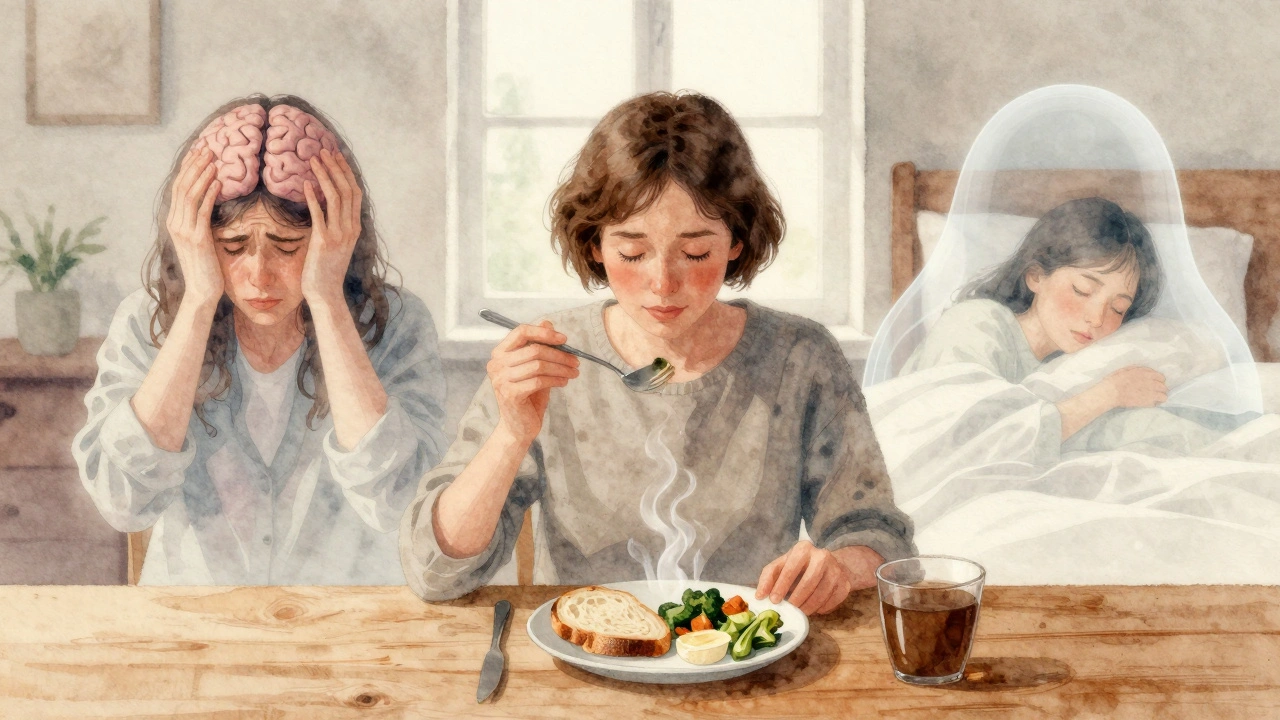
Bad sleep and poor gut health feed each other. If your gut is inflamed, it releases cytokines-molecules that disrupt your sleep cycle. At the same time, lack of sleep reduces the diversity of your gut bacteria. One study found that people who slept less than 6 hours a night had 20% fewer beneficial microbes compared to those who slept 7-8 hours.
This isn’t just about feeling tired. Low microbial diversity is linked to weight gain, weakened immunity, and even brain fog. You might think your afternoon crash is from caffeine withdrawal. But it could be your gut bacteria aren’t producing enough GABA, a calming neurotransmitter that helps you stay steady.
Fixing this means treating sleep like part of your gut care routine. Avoid heavy meals 3 hours before bed. Skip alcohol-it may help you fall asleep, but it destroys gut lining and reduces good bacteria. Try a warm herbal tea like chamomile or ginger. Keep your bedroom cool. Your gut will thank you.
Immunity Starts in Your Gut
Over 70% of your immune system lives in your gut. The bacteria there train your immune cells to tell the difference between harmless substances (like peanut butter) and real threats (like viruses). When your gut flora is out of whack, your immune system gets confused. It starts overreacting to foods, pollen, or even your own cells.
That’s why so many people develop new allergies or autoimmune flare-ups after antibiotics, a bad bout of food poisoning, or months of poor diet. Your good bacteria got wiped out, and your immune system lost its training manual.
Rebuilding it takes time. Probiotic supplements can help, but they’re not magic. Real recovery comes from consistent fiber intake-aim for 30 grams a day from vegetables, legumes, nuts, and whole grains. Fermented foods like plain yogurt, kefir, sauerkraut, and miso add live cultures that stick around longer than pills.

What’s Holding You Back?
Most people know they should eat better. But they’re stuck because they think they need a complete overhaul. You don’t. Start with one thing: track your meals and how you feel for a week. Write down what you ate and note any bloating, fatigue, mood swings, or brain fog. You might be surprised. Maybe you feel awful every time you have pizza. Or maybe your afternoon slump always follows a sugary snack.
Once you spot the pattern, change one thing. Swap white bread for sourdough. Drink water before coffee. Add a handful of spinach to your smoothie. These aren’t radical changes-they’re small, doable, and they add up.
Don’t chase the latest gut supplement or detox trend. The science is clear: whole foods, regular meals, stress management, and sleep are the real foundation. No pill replaces that.
Your Gut Is Always Talking
It’s not just about pooping regularly. Your gut is whispering to you every day-through your energy, your mood, your skin, your sleep, your focus. When you ignore those signals, your body starts shouting. Headaches. Fatigue. Irritability. Brain fog. Skin breakouts. These aren’t random. They’re your gut asking for help.
Healing your gut isn’t about perfection. It’s about paying attention. Eating real food. Moving your body. Resting. Reducing stress. Giving your gut the space it needs to do its job. When you do, you don’t just feel better after meals-you feel better in every part of your life.
Can gut health affect my weight?
Yes. An imbalanced gut can make it harder to lose weight-even if you’re eating less. Harmful bacteria can increase cravings for sugar and fat, slow metabolism, and cause inflammation that interferes with fat-burning hormones. People with low microbial diversity often struggle with stubborn belly fat. Fixing gut health doesn’t guarantee weight loss, but it removes a major barrier.
Do probiotic supplements really work?
They can help, but they’re not a cure-all. Most store-bought probiotics contain only a few strains, and many die before reaching your gut. The best results come from combining supplements with fiber-rich foods that feed good bacteria. Fermented foods like kimchi, kefir, and kombucha often provide more diverse, resilient cultures than pills. Supplements are useful short-term, especially after antibiotics-but long-term, food is king.
Why do I feel bloated after eating healthy foods like beans and broccoli?
Fiber-rich foods feed good bacteria, but that process produces gas. If your gut isn’t used to fiber, you’ll feel bloated. Start small-add a quarter cup of beans per day and increase slowly. Drink plenty of water. Chew thoroughly. Over time, your gut bacteria adapt and gas production drops. This isn’t a sign your food is bad-it’s a sign your gut is healing.
Can antibiotics permanently damage my gut?
Not permanently, but they can cause long-lasting imbalance. A single course of antibiotics can reduce gut diversity for months or even years, especially if you don’t support recovery with fiber and fermented foods. After antibiotics, focus on eating a wide variety of plants-aim for 30 different types per week. This rebuilds diversity faster than any supplement.
Is there a test to check my gut health?
Yes, but they’re not always helpful. Stool tests can show which bacteria are present, but they don’t tell you how well your gut is functioning. Symptoms matter more than numbers. If you have bloating, fatigue, or mood swings, focus on lifestyle changes first. Tests can be useful if you’re dealing with chronic issues and want to rule out infections like SIBO or parasites-but they’re not a starting point for most people.
If you’ve been feeling off-not just your stomach, but your whole body-your gut might be the missing piece. You don’t need a miracle cure. Just consistency. Eat real food. Move your body. Sleep. Breathe. Give your gut the chance to heal, and you’ll start noticing changes not just in your digestion, but in your energy, your mood, and your clarity. It’s not magic. It’s biology.