
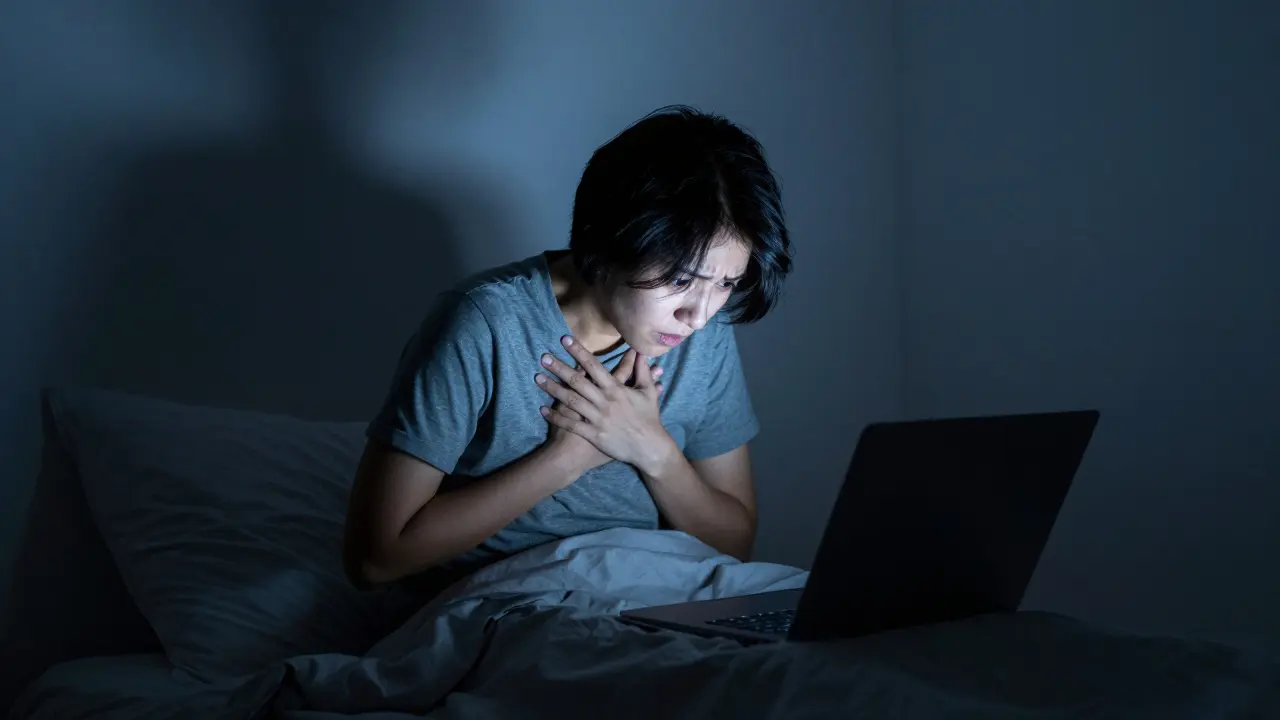
You’ve had a headache for three days. Your chest feels tight. Your stomach churns every morning. You scroll through medical sites until your eyes burn. Your heart races. Is this just anxiety-or could something serious be wrong?
It’s a question that keeps millions awake at night. Health anxiety-once called hypochondria-isn’t about being dramatic. It’s a real, exhausting loop where normal body sensations get twisted into signs of disaster. But here’s the catch: health anxiety doesn’t mean your symptoms aren’t real. They are. The problem is the meaning you assign to them.
What Health Anxiety Actually Feels Like
People with health anxiety don’t just worry about being sick. They become detectives of their own bodies, hunting for clues that something’s wrong. A muscle twitch becomes ALS. A burp turns into esophageal cancer. A fleeting dizzy spell? Brain tumor. The fear isn’t occasional-it’s constant. And it doesn’t fade with reassurance. In fact, it gets worse.
One woman in Perth told me she checked her lymph nodes twice a day for six months after a friend got lymphoma. She didn’t have cancer. But the anxiety made her feel like she did. She lost sleep, skipped work, and avoided doctors because she was terrified they’d miss something. That’s health anxiety: a mental trap where the fear of illness becomes the illness itself.
Real Health Issues Don’t Behave Like Anxiety
Real medical conditions follow patterns. They don’t vanish when you distract yourself. They don’t change location every time you Google them. They don’t disappear after a good night’s sleep.
Here’s what real issues usually look like:
- They get worse over time, not better, even with rest.
- They show up with clear triggers-like chest pain after exercise, or nausea after eating certain foods.
- They come with other symptoms that match a known condition. For example, a heart attack usually includes pain radiating to the arm, sweating, and shortness of breath-not just a vague chest tightness.
- They respond to medical treatment. If you take antibiotics for a bacterial infection, you start feeling better in a few days.
Health anxiety, on the other hand, thrives on uncertainty. It feeds on vague, fleeting sensations that shift and change. A tingling hand today, a sore throat tomorrow, a weird noise in your chest the next. No pattern. No progression. Just noise.
The Body Lies (And Your Brain Believes It)
Here’s something most people don’t realize: anxiety physically changes your body. It’s not "just in your head." When you’re anxious, your nervous system goes into overdrive. Your muscles tense. Your heart pumps harder. Your stomach slows down. Your breathing gets shallow. You might feel lightheaded, numb, or like your skin is crawling.
These aren’t imaginary. They’re real physical reactions. But they’re also normal responses to stress. The problem? People with health anxiety interpret these normal signals as proof of disease. A racing heart isn’t stress-it’s a heart attack. A dry mouth isn’t dehydration-it’s Sjögren’s syndrome.
Studies from the American Psychological Association show that people with health anxiety are more likely to notice bodily sensations and interpret them as dangerous. Their brains are wired to scan for threats. It’s like having a smoke alarm that goes off every time you toast bread.
When to Trust Your Gut-And When to Trust Your Doctor
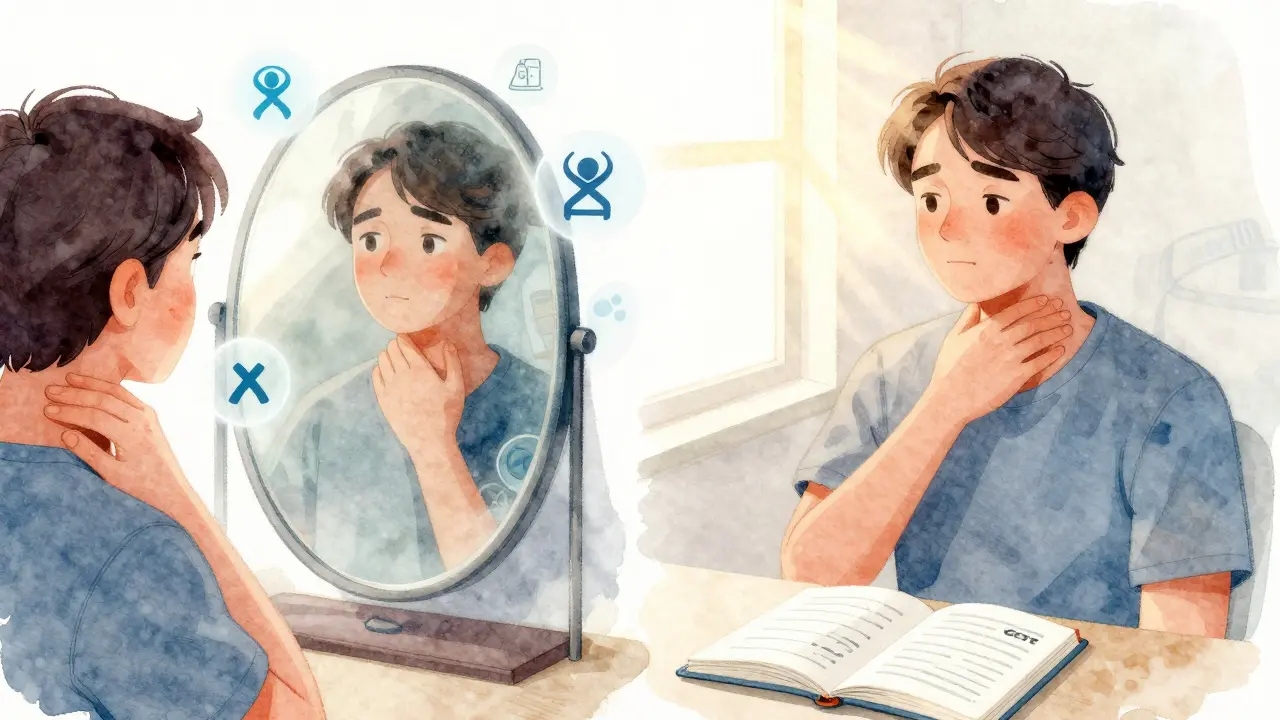
There’s no shame in getting checked out. If you’re unsure, seeing a doctor is smart. But here’s the line: if you’ve had a full medical workup and all tests came back normal, yet you still believe something’s wrong, you’re likely caught in the anxiety loop.
Here’s what to do:
- Get one thorough checkup. Don’t keep bouncing between doctors looking for a different answer.
- Write down your symptoms and when they happen. Be specific: "I felt dizzy after standing up quickly, twice this week." Not "I feel off all the time."
- Ask your doctor: "Is this consistent with anxiety?" If they say yes, and your tests are clear, accept that answer-even if it’s hard.
- Stop Googling. Seriously. Every search resets your brain’s threat detector.
One man I spoke with had 17 blood tests in two years because he was convinced he had leukemia. Every test was normal. He finally saw a therapist and learned his anxiety had spiked after his father’s death. The physical symptoms? Stress. The diagnosis? Health anxiety.
What Health Anxiety Isn’t
It’s not being careful. It’s not being proactive. It’s not "just being cautious." People with real health concerns often have clear risk factors: a family history of heart disease, smoking, obesity, or a known genetic condition. They follow up with screenings. They make changes. They don’t obsess over every flicker of sensation.
Health anxiety is when you’re terrified of illness even when there’s no reason to be. When you’re more afraid of the diagnosis than the disease. When you’d rather believe you have cancer than accept that your body is just reacting to stress.
Breaking the Cycle
The good news? Health anxiety is treatable. And it doesn’t require years of therapy.
Cognitive Behavioral Therapy (CBT) is the gold standard. It helps you rewire how you interpret bodily sensations. Instead of thinking, "My chest hurts-this is a heart attack," you learn to say, "My chest is tight because I’m anxious. This feels scary, but it’s not dangerous."
Here’s what works in practice:
- Delay checking symptoms. If you feel a strange sensation, wait 30 minutes before Googling or touching the area.
- Write down your thoughts. When you think, "I have cancer," write it down. Then ask: "What’s the evidence? What’s the alternative?"
- Reduce reassurance-seeking. No more asking friends, "Do I look sick?" or texting your doctor for updates.
- Practice exposure. Sit with the discomfort. Let the fear rise, then fade. It will.
One study from the University of Oxford followed 120 people with severe health anxiety. After 12 weeks of CBT, 78% reported a major drop in symptoms. Not because their bodies changed. Because their minds did.
When to Seek Help
You don’t need to suffer alone. If health anxiety is:
- Interfering with your job, relationships, or daily life
- Leading you to avoid doctors or medical care out of fear
- Causing panic attacks or depression
- Driving you to spend money on unnecessary tests or treatments
Then it’s time to see a mental health professional. A psychologist trained in CBT can help you break the cycle. And yes-it’s as valid as seeing a doctor for a physical problem.
Health anxiety isn’t weakness. It’s a brain that’s learned to sound alarms too often. And like any learned behavior, it can be unlearned.
Final Thought: Your Body Is Not Your Enemy
Your body isn’t trying to trick you. It’s trying to protect you. But when anxiety takes over, protection turns into persecution. You start treating every signal as a threat.
The goal isn’t to ignore your body. It’s to listen without panic. To notice sensations without assigning them meaning. To trust that most of the time, your body is just doing its job-quietly, reliably, and without drama.
Real health issues need attention. Health anxiety needs understanding. And you deserve both.
Can health anxiety cause real physical symptoms?
Yes. Health anxiety doesn’t just make you feel anxious-it triggers real physical responses like muscle tension, dizziness, heart palpitations, stomach upset, and numbness. These are caused by the body’s stress response, not by disease. But because they feel real, they reinforce the fear that something is wrong.
How do I know if my symptoms are anxiety or something serious?
If you’ve had a full medical evaluation and all tests came back normal, your symptoms are likely anxiety-related. Real medical conditions usually follow a pattern, worsen over time, and respond to treatment. Anxiety symptoms tend to be vague, shifting, and worsened by stress or worry-not by physical activity or specific triggers.
Is Googling symptoms making my health anxiety worse?
Yes. Research shows that searching for symptoms online increases anxiety and leads to misinterpretation. Medical websites often list rare conditions first. Your brain latches onto the worst possibility, even if it’s statistically unlikely. Avoiding symptom searches is one of the most effective ways to reduce health anxiety.
Can health anxiety be cured?
It can be managed effectively-and for many, symptoms disappear entirely. Cognitive Behavioral Therapy (CBT) has been proven to reduce health anxiety in 70-80% of cases. It doesn’t erase the sensations, but it changes how you respond to them. With practice, you learn to tolerate uncertainty and stop treating every sensation as a crisis.
Should I avoid doctors if I have health anxiety?
No. Avoiding doctors can make anxiety worse. Instead, schedule one thorough checkup with a trusted doctor. Get clear test results. Then commit to not returning unless new, persistent symptoms appear. Repeated visits for reassurance reinforce the anxiety cycle. One full evaluation is enough.
Is health anxiety the same as hypochondria?
Yes, but the term "hypochondria" is outdated and stigmatizing. The current clinical term is Illness Anxiety Disorder (IAD), part of the broader category of health anxiety. Both describe the same pattern: excessive fear of illness despite medical reassurance. The name changed to reduce shame and encourage treatment.
Next Steps If You’re Struggling
Start small. Pick one thing from the list above and try it this week. Maybe it’s writing down your anxious thoughts. Or skipping one Google search. Or telling a friend, "I’m working on health anxiety-I need you to not reassure me about my symptoms."
Progress isn’t linear. Some days will feel harder. That’s normal. The goal isn’t to feel completely free of worry. It’s to stop letting worry control your life.
You’re not broken. You’re not crazy. You’re just stuck in a loop that’s easy to fall into-and harder to get out of without help. But you’re not alone. And help is waiting.