
You’ve trained your body. You know the drills, you’ve logged the miles, and your nutrition is on point. But when the whistle blows or the starting gun fires, your mind goes blank-or worse, it races with doubt. This isn’t a lack of talent; it’s a gap in mental conditioning. Mindfulness for athletes isn’t about sitting cross-legged in silence while the rest of the team lifts weights. It is a practical tool to sharpen focus, regulate emotions, and execute skills under pressure.
In high-stakes environments, whether you are an elite Olympian or a weekend warrior running your first marathon, the difference between success and failure often comes down to milliseconds of decision-making. Mindfulness trains the brain to stay present, preventing past mistakes from haunting you and future anxieties from paralyzing you. Let’s look at how this practice actually works in the trenches of competition.
The Science of Presence in Sport
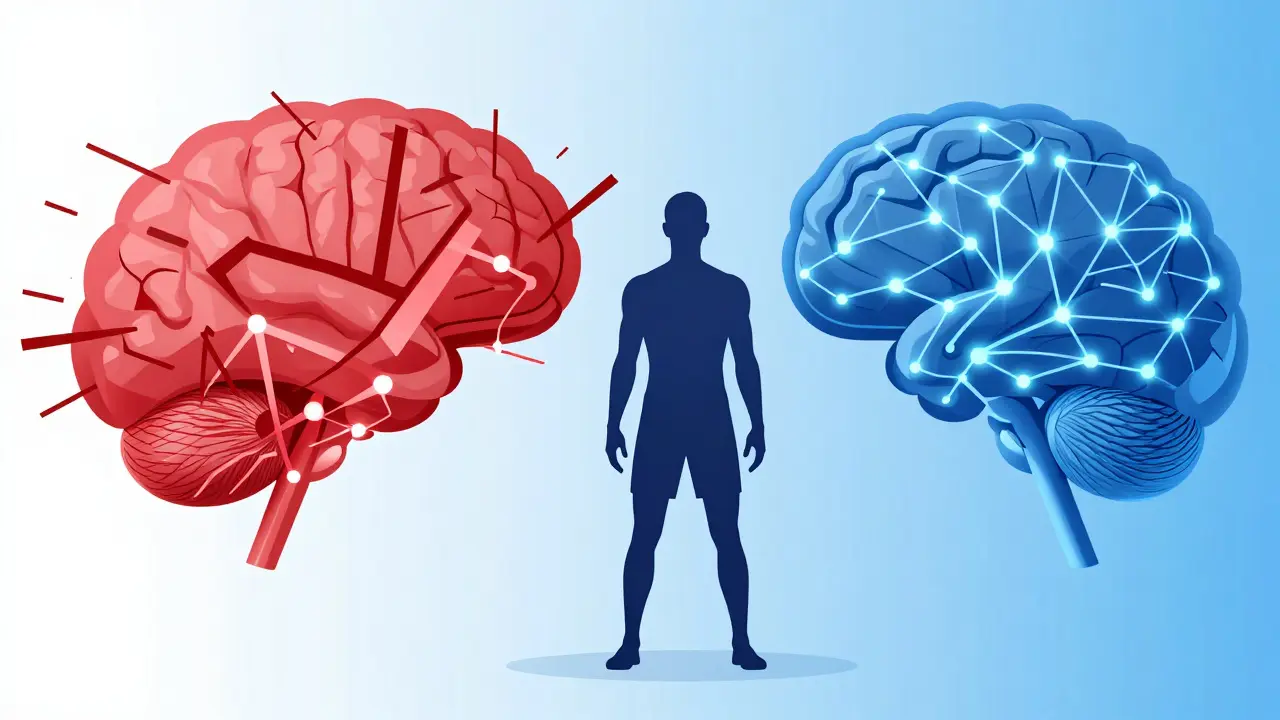
To understand why mindfulness helps, we need to look at what happens in the brain during intense physical activity. When you are stressed or anxious, your amygdala-the brain's alarm system-lights up. This triggers a "fight or flight" response, releasing cortisol and adrenaline. While some adrenaline is good for power, too much creates tunnel vision and muscle tension. You start overthinking your technique instead of feeling it.
Mindfulness is the psychological process of purposely bringing one's attention to experiences occurring in the present moment without judgment. In sports terms, this means observing your thoughts (like "I'm tired" or "They're faster") without letting them dictate your actions. Research published in journals like *Psychology of Sport and Exercise* shows that regular mindfulness practice reduces activity in the amygdala and strengthens connections in the prefrontal cortex, the area responsible for executive function and decision-making.
Think of it like strength training, but for your attention span. Just as you repeat squats to build leg muscles, you repeat mindfulness exercises to build "attention muscles." The result? A calmer nervous system that recovers faster and reacts more precisely.
Key Benefits for Athletic Performance
Why should you add this to your routine? The benefits go beyond just "feeling chill." Here is how mindfulness directly impacts your stats:
- Enhanced Focus: You learn to filter out distractions-crowd noise, opponent trash talk, or internal chatter-and lock onto the task at hand.
- Faster Recovery: By lowering stress hormones, your body repairs tissue more efficiently. Sleep quality improves, which is critical for growth hormone release.
- Better Emotional Regulation: Missed shots happen. Mindfulness helps you accept the error immediately and reset, rather than spiraling into frustration that ruins the next play.
- Pain Management: It doesn't remove pain, but it changes your relationship with it. You can distinguish between "injury pain" (stop) and "discomfort" (push through), allowing for better endurance.
Practical Exercises for Daily Training
You don’t need an hour of meditation to see results. Integration is key. Here are three specific techniques tailored for athletes:
1. The Breath Anchor
This is your emergency brake for panic. Before a free throw, a penalty kick, or a serve, take three deep breaths. Inhale through the nose for four seconds, hold for two, and exhale through the mouth for six. As you breathe, visualize your breath moving through your body. If your mind wanders to the score, gently bring it back to the sensation of air entering your nostrils. This simple act shifts your nervous system from sympathetic (stress) to parasympathetic (calm).
2. Body Scan for Tension Release
Tension kills speed and accuracy. During warm-ups, do a quick body scan. Start at your toes and move up to your head. Ask yourself: "Where am I holding tightness?" Often, athletes clench their jaws or hunch their shoulders without realizing it. Consciously relax those areas. This not only improves biomechanics but also signals to your brain that you are safe and ready to perform.
3. Sensory Grounding
Use your five senses to stay in the now. Before stepping onto the field, notice five things you can see, four you can touch, three you can hear, two you can smell, and one you can taste. For a runner, this might be the texture of the track, the sound of spikes clicking, the smell of rain. This anchors you in the physical reality of the sport, pulling you out of hypothetical worries.
Mindfulness vs. Visualization
Many athletes use visualization (imagining success). Mindfulness is different, though they work well together. Visualization is prospective-you are projecting forward into a desired outcome. Mindfulness is present-focused-you are accepting what is happening right now.
| Feature | Mindfulness | Visualization |
|---|---|---|
| Focus Direction | Present Moment | Future Outcome |
| Primary Goal | Awareness & Acceptance | Skill Rehearsal & Confidence |
| Best Used When | Feeling Anxious or Distracted | Preparing for Specific Moves |
| Effect on Stress | Reduces Cortisol | Can Increase Arousal |
Imagine you are a tennis player. Visualization helps you picture the perfect serve. Mindfulness helps you notice your grip is slipping due to sweat and adjust it immediately, without judging yourself for sweating. Use both: visualize the win, but stay mindful of the execution.
Overcoming Common Pitfalls
New practitioners often make the same mistakes. First, trying to "empty the mind." This is impossible and frustrating. Your goal is not to stop thinking; it is to notice when you are thinking and choose where to place your attention. Second, expecting immediate perfection. Mindfulness is a skill. Some days your focus will be sharp; other days it will be scattered. That is okay. The practice is in returning to the present, not staying there forever.
Another pitfall is using mindfulness as avoidance. Don’t use it to ignore valid concerns, like injury pain or strategic errors. Use it to observe those concerns clearly so you can address them effectively. If your knee hurts, mindfulness helps you feel the exact location and intensity of the pain, allowing you to communicate better with your physiotherapist.

Building a Long-Term Routine
Consistency beats intensity. Ten minutes a day is better than one hour once a week. Integrate mindfulness into existing habits. Practice breathing during cool-down stretches. Do a body scan while waiting for the bus to practice. Turn mundane moments into mental reps.
Track your progress not by how calm you feel, but by how quickly you recover from distraction. Did you miss a pass? How long did it take you to get back into the game flow? Over time, that window shrinks. That is the true metric of athletic mindfulness.
FAQ
How long does it take for mindfulness to improve athletic performance?
Most studies suggest noticeable improvements in focus and stress regulation within 4 to 8 weeks of consistent daily practice. However, subtle benefits like better emotional control can be felt after just a few sessions. Like physical training, the more you practice, the stronger the neural pathways become.
Can mindfulness help with competitive anxiety?
Yes. Mindfulness teaches you to observe anxiety as a physical sensation rather than a catastrophic event. By labeling the feeling (e.g., "I am noticing tightness in my chest") without judging it, you reduce its power. This prevents the spiral of worry that often leads to choking under pressure.
Do I need to meditate to practice mindfulness?
No. Meditation is one way to practice mindfulness, but it is not the only way. Informal mindfulness involves bringing full attention to everyday activities, such as eating, walking, or listening to a coach. Formal meditation is helpful for building concentration, but informal practice integrates mindfulness into your sport.
Is mindfulness suitable for all types of sports?
Absolutely. Whether you play a team sport like soccer, an individual sport like golf, or a combat sport like boxing, mindfulness enhances focus and reaction time. Team sports benefit from improved communication and reduced conflict, while individual sports benefit from heightened self-awareness and precision.
How does mindfulness affect sleep recovery?
Mindfulness reduces rumination-the habit of replaying events or worrying about the future-which is a major cause of insomnia. By calming the nervous system before bed, athletes fall asleep faster and spend more time in deep, restorative sleep stages, crucial for muscle repair and cognitive function.