

When you’re training hard-whether you’re running marathons, lifting weights, or playing weekend soccer-you’re not just building strength. You’re breaking down muscle tissue, tightening connective tissue, and building up tension that doesn’t just disappear after you rest. That’s where sports massage comes in. It’s not a luxury. It’s a tool. And if you’re new to it, you might be surprised by how much it can change your recovery, your performance, and even your day-to-day comfort.
What Exactly Is Sports Massage?
Sports massage isn’t just a deep tissue massage with a gym bag. It’s a targeted form of manual therapy designed specifically for people who move a lot. Unlike Swedish massage, which focuses on relaxation, sports massage uses techniques like deep friction, trigger point release, and myofascial stretching to address the physical demands of athletic activity.
It’s used before events to prepare muscles for action, after events to flush out metabolic waste, and during training to fix imbalances before they turn into injuries. The goal isn’t to make you feel like you’ve been hugged by a cloud-it’s to make you feel like your body is working the way it should.
Studies from the Journal of Athletic Training show that athletes who received regular sports massage reported faster recovery times and reduced muscle soreness after intense sessions. The difference? It’s not magic. It’s improved blood flow, reduced muscle stiffness, and better nerve function.
Who Benefits From Sports Massage?
You don’t have to be a professional athlete to need this. If you fall into any of these categories, sports massage can help:
- You run or cycle regularly and feel tight hamstrings or IT band pain
- You lift weights and notice your shoulders or lower back feel stiff after sessions
- You play team sports and get sore after games, even if you stretch
- You’re returning from an injury and want to rebuild mobility safely
- You sit at a desk all day but train after work-and your body feels like it’s fighting itself
Even people who just started walking 10,000 steps a day can benefit. Movement creates tension. Sports massage helps your body handle it.
How Does It Actually Work?
Sports massage works on three main levels: mechanical, physiological, and neurological.
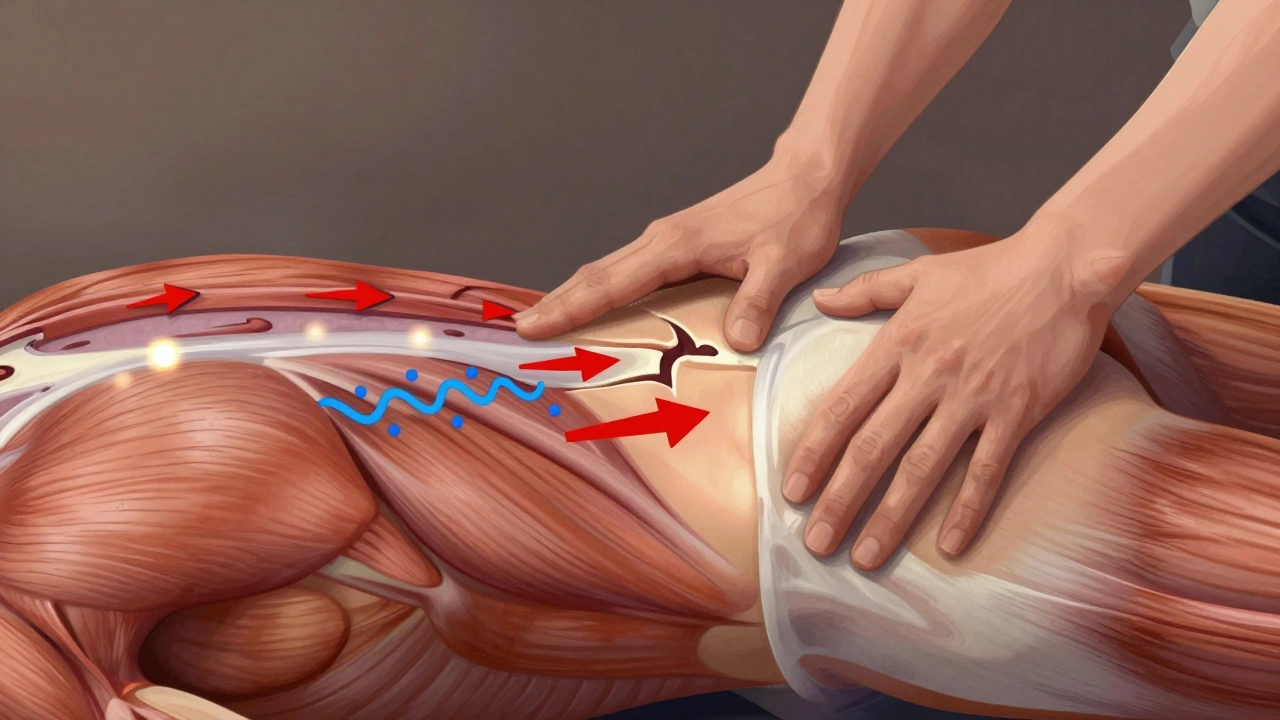
Mechanically, the therapist applies pressure to break up adhesions-those sticky spots between muscle fibers and fascia that form after repeated strain. Think of it like untangling a knot in a rope. Left alone, it restricts movement. With pressure and movement, it loosens.
Physiologically, the massage increases circulation. Blood carries oxygen and nutrients to tired muscles and removes lactic acid and other waste products. One study found a 20% increase in blood flow to massaged areas within minutes.
Neurologically, massage signals your nervous system to relax. It reduces muscle spindle activity-the reflexes that keep muscles tight-and lowers cortisol levels. That’s why you might feel looser and calmer even if the massage was deep and intense.
It’s not just about feeling good in the moment. It’s about changing how your body responds to stress over time.
What Happens in a Typical Session?
If this is your first time, here’s what to expect:
- You’ll fill out a short intake form-your training routine, injuries, areas of pain, and goals.
- The therapist will do a quick posture and movement check. They might ask you to squat or reach overhead.
- You’ll lie on a table, usually in underwear or athletic shorts. A towel covers you at all times.
- The therapist will use oil or lotion and work on specific areas: legs, back, shoulders, hips-whatever’s relevant to your sport or pain.
- They’ll use a mix of techniques: effleurage (gliding strokes), petrissage (kneading), friction (deep circular pressure), and stretching.
- The session lasts 30 to 90 minutes, depending on your needs.
It might hurt-especially if you’re really tight-but it shouldn’t feel like you’re being torn apart. Good therapists adjust pressure based on your feedback. If it’s sharp or burning, speak up.
When Should You Get a Sports Massage?
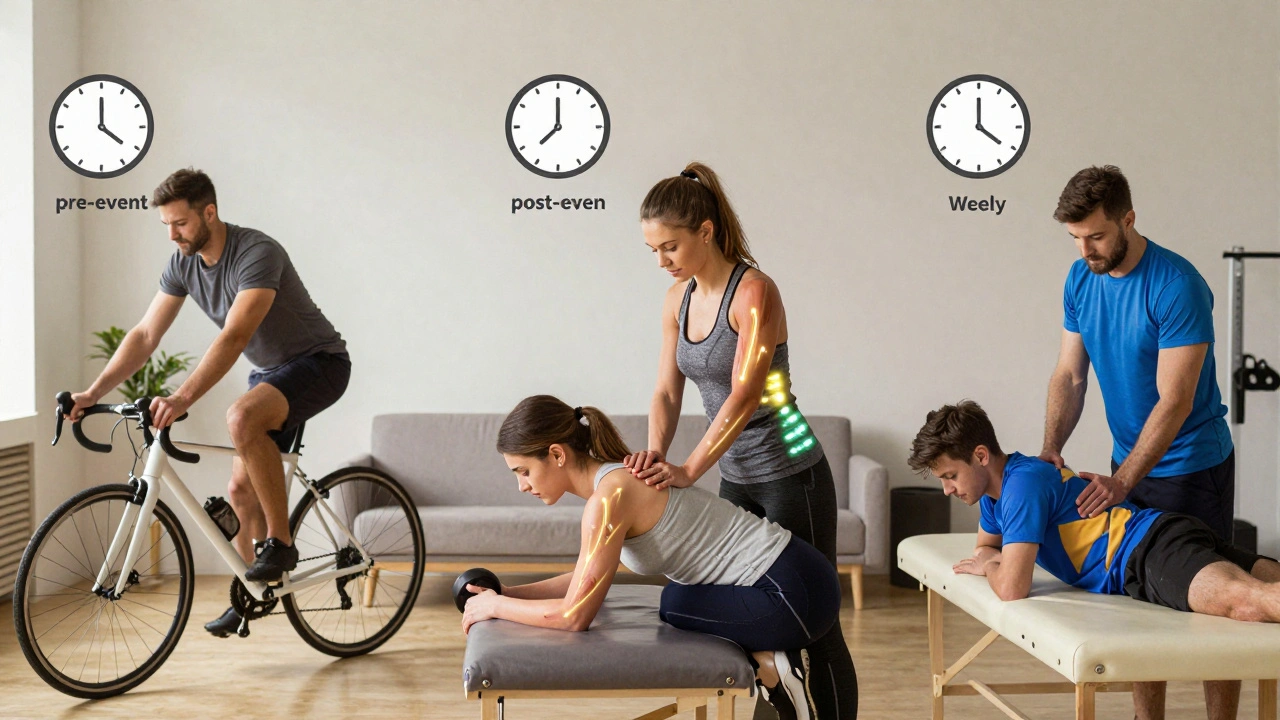
Timing matters. Here’s a simple guide:
- Before an event (24-48 hours before): Light, stimulating massage to increase blood flow and loosen tight areas. Avoid deep work-it can leave you sore.
- After an event (within 2 hours or the next day): Focus on flushing out waste, reducing swelling, and calming the nervous system. Gentle pressure with long strokes.
- During training (weekly or biweekly): Target problem areas before they become injuries. This is where most athletes get the biggest long-term benefits.
- Recovery from injury: Only with clearance from a physio or doctor. Massage can help restore mobility, but only if done correctly.
Don’t wait until you’re in pain. Prevention is the whole point.
What to Look for in a Therapist
Not every massage therapist knows sports massage. Look for these signs:
- They ask about your sport, training schedule, and goals-not just where it hurts
- They have certification in sports massage (like from the Australian Sports Massage Association or similar)
- They’ve worked with athletes before, even if they’re recreational
- They don’t just give you a generic deep tissue session
Ask if they’ve worked with runners, cyclists, or weightlifters. If they say yes and can explain what they did, that’s a good sign.
What to Do After Your Session
Don’t just get up and go. Recovery starts after the massage.
- Drink water-your body is flushing out toxins. Aim for 500ml within an hour.
- Move gently. Walk for 10-15 minutes. Don’t sit still.
- Avoid intense training for 24 hours after a deep session.
- Apply ice if you feel soreness the next day-especially after a heavy session.
- Don’t expect to feel amazing right away. Sometimes it takes 24-48 hours for the real benefits to show.
Common Myths About Sports Massage
Let’s clear up a few misunderstandings:
- Myth: Sports massage removes lactic acid. Truth: Lactic acid clears naturally within an hour. Massage helps with other waste products and muscle tension, not lactic acid.
- Myth: You need to be in pain to benefit. Truth: Regular maintenance prevents pain. Many athletes get massages weekly, even when they feel fine.
- Myth: It’s just a fancy relaxation technique. Truth: It’s a physical therapy tool. It changes tissue structure and nerve signaling.
- Myth: More pressure = better results. Truth: Too much pressure can cause bruising or inflammation. Skill matters more than strength.
How Often Should You Get One?
There’s no one-size-fits-all answer, but here’s a practical baseline:
- Recreational athlete (3-5 workouts/week): Once every 3-4 weeks
- Regular trainer (5-7 workouts/week): Once every 1-2 weeks
- Competitive athlete (daily training, races/events): Weekly or even twice weekly during peak season
- Recovering from injury: As advised by your physio-could be 2-3 times a week initially
Start with one session. See how your body responds. Then adjust. You don’t need to commit to monthly sessions right away.
Can You Do It Yourself?
You can’t replace a trained therapist, but you can support your recovery at home:
- Use a foam roller on quads, hamstrings, calves, and back-5 minutes a day
- Try a lacrosse ball for trigger points in shoulders or hips
- Stretch after workouts, holding each stretch for 30 seconds
- Use a percussion massager (like a Hypervolt) for 2-3 minutes per muscle group
These tools help maintain mobility between sessions. But they’re not a substitute for hands-on therapy when you’re dealing with deep tension or chronic tightness.
Final Thoughts: Is It Worth It?
If you’re serious about staying active, sports massage isn’t optional. It’s part of your training plan-like sleep, nutrition, or hydration.
It doesn’t cost a fortune. In Canberra, a 60-minute session typically runs between $80 and $120. Compare that to the cost of missing a training week because of a pulled muscle or a month off because of chronic tightness.
Sports massage gives you back control. It helps you train harder, recover faster, and stay in the game longer. You don’t need to be elite to benefit. You just need to care about your body.
Book your first session. Don’t wait until you’re sore. Don’t wait until you’re injured. Start now.
Is sports massage the same as deep tissue massage?
No. Deep tissue massage targets chronic muscle tension and is often used for general pain relief. Sports massage is tailored to athletes and active people-it focuses on performance, recovery, and injury prevention. It uses specific techniques based on the sport or activity, not just deep pressure.
Does sports massage hurt?
It can feel intense, especially if you’re tight or have knots, but it shouldn’t be sharp or unbearable. A good therapist will check in with you and adjust pressure. If it feels like pain instead of pressure, speak up. Discomfort is normal; injury isn’t.
How soon after a workout should I get a massage?
Within 2 hours is ideal for post-event recovery. The goal is to reduce inflammation and flush out metabolic waste before it settles into the tissue. If you can’t get a massage that soon, aim for the next day. Even then, it helps.
Can sports massage prevent injuries?
Yes, indirectly. It doesn’t magically stop injuries, but it reduces muscle imbalances, tightness, and restricted movement-common causes of strains and overuse injuries. Regular sessions help you notice problems early, before they become serious.
Do I need to be an athlete to get sports massage?
No. Anyone who moves regularly-whether you’re walking daily, gardening, playing with kids, or lifting weights at home-can benefit. Sports massage isn’t just for elite performers. It’s for anyone who wants their body to feel better and move easier.
How long do the effects last?
You’ll feel looser right away, but the real benefits build over time. One session might give you a few days of improved mobility. Regular sessions-every 1-4 weeks-create lasting changes in muscle texture, flexibility, and recovery speed.
Next steps: Find a certified sports massage therapist in your area. Book your first session. Try it before your next workout. Notice how you feel 24 hours later. Then decide if it’s part of your routine.