

You can eat the cleanest diet in Sydney, hit the gym five days a week, and still feel like you’re running on empty. Sound familiar? For years, we’ve treated health as a checklist of inputs: calories, steps, sleep hours. But there’s a silent variable that undermines every other effort-chronic stress. It’s not just a feeling; it’s a physiological state that hijacks your body’s ability to heal, burn fat, and think clearly.
Think of your body as a high-performance car. You can pour premium fuel into the tank (nutrition), tune the engine (exercise), and change the oil (sleep). But if you keep driving with the handbrake on, the engine will overheat and fail. Chronic stress is that handbrake. Until you address stress reduction, no amount of kale or cardio will fix the underlying imbalance. This isn’t about adding another task to your to-do list; it’s about removing the friction that makes everything else harder.
The Biology of the "Handbrake"
To understand why stress ruins your progress, you need to look at what’s happening under the hood. When you perceive a threat-whether it’s a roaring lion or an aggressive email from your boss-your brain triggers the hypothalamic-pituitary-adrenal (HPA) axis. This releases cortisol and adrenaline. In short bursts, this is helpful. It sharpens focus and boosts energy. But when the threat never goes away, your body stays in "fight or flight" mode.
Here’s the problem: cortisol doesn’t just make you anxious. It actively blocks insulin sensitivity, which means your body stores fat instead of burning it, especially around the midsection. It suppresses the immune system, making you more prone to colds and inflammation. It disrupts gut motility, leading to bloating and poor nutrient absorption. If you’ve ever wondered why you gain weight despite eating less, or why you’re constantly sick, chronic cortisol elevation is likely the culprit.
| Body System | Acute Stress Response | Chronic Stress Impact |
|---|---|---|
| Metabolism | Increased blood sugar for energy | Insulin resistance, visceral fat storage |
| Digestion | Slowed digestion to save energy | Gut dysbiosis, leaky gut, IBS symptoms |
| Immune System | Temporary suppression | Chronic inflammation, frequent illness |
| Cognitive Function | Heightened alertness | Brain fog, memory loss, anxiety |
Why Willpower Isn't Enough
We often blame ourselves for lacking discipline. We think, "If I just meditated more, I’d be calm." But trying to relax using willpower is like trying to stop a spinning top by pushing it down harder. It doesn’t work because your nervous system is operating on autopilot. The sympathetic nervous system (gas pedal) is stuck in the "on" position, and the parasympathetic nervous system (brake) is disconnected.
You can’t think your way out of a physiological state. You have to signal your body that it’s safe. This requires bottom-up processing-using physical actions to calm the mind, rather than top-down processing (trying to control thoughts). This is why talking to a therapist is great, but if your body is still flooded with stress hormones, the insights won’t stick. You need to reset the hardware before you can update the software.
Practical Tools to Flip the Switch
So, how do you actually engage that brake? You don’t need a retreat in Bali. You need simple, repeatable tools that trigger the vagus nerve-the main component of the parasympathetic nervous system. Here are three evidence-based methods that work in real life, not just in theory.
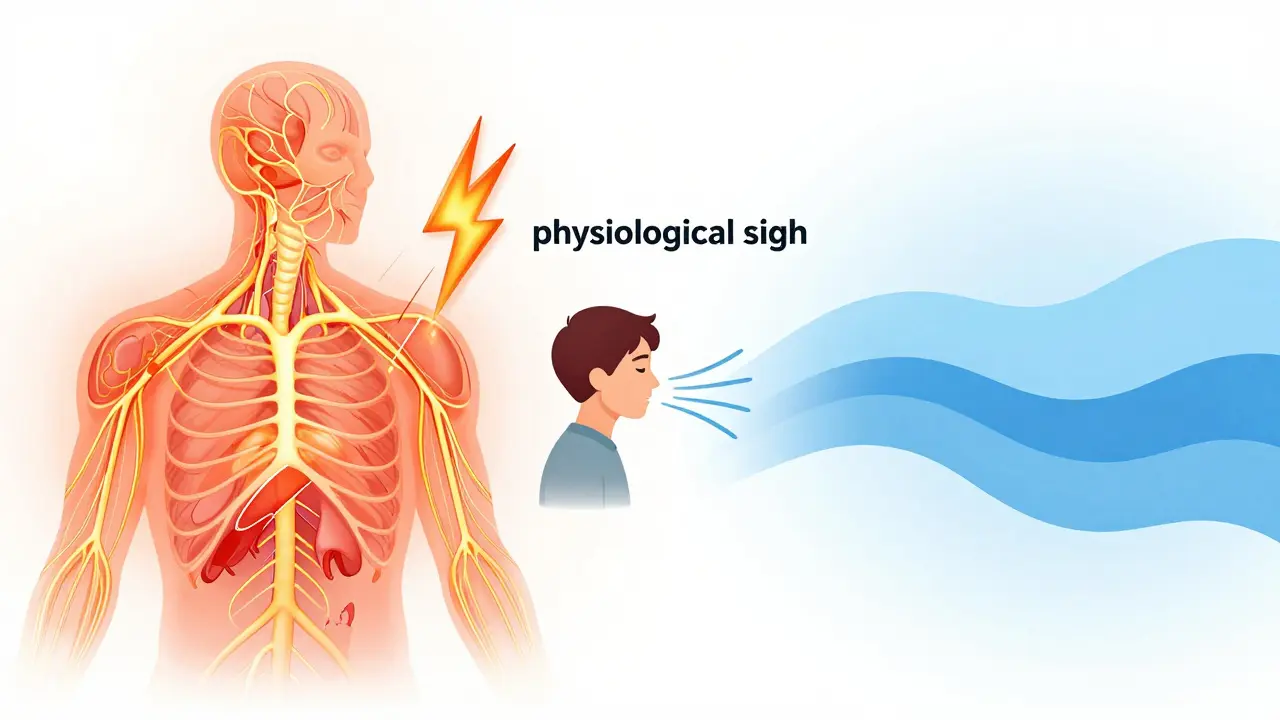
- Physiological Sighing: This is the fastest way to lower carbon dioxide levels and calm the heart rate. Take two short inhales through the nose (the second one shorter than the first), followed by one long, slow exhale through the mouth. Do this three to five times. It’s been shown in studies to reduce stress markers faster than standard deep breathing.
- Cold Exposure: Splash cold water on your face or finish your shower with 30 seconds of cold water. This activates the mammalian dive reflex, which instantly slows your heart rate and forces your body to switch gears. It’s a hard reset for your nervous system.
- Nature Immersion: Walk outside without your phone. Just twenty minutes in a green space lowers cortisol levels significantly. The fractal patterns in nature (leaves, branches, clouds) are easier for the brain to process than urban environments, reducing cognitive load.
The Gut-Brain Axis Connection
If you’ve ever had "butterflies" in your stomach when nervous, you know the gut and brain are connected. They’re linked by the vagus nerve and share the same neurotransmitters. About 90% of your serotonin, the "feel-good" chemical, is produced in the gut. When stress is high, gut bacteria become imbalanced (dysbiosis), which sends distress signals back to the brain, creating a vicious cycle of anxiety and digestive issues.
This is why probiotics alone might not fix your mood if you’re still stressed. You need to reduce the stress first to allow the gut lining to heal. Focus on fermented foods like kimchi or sauerkraut, but pair them with stress-reduction practices. If your nervous system is in panic mode, your body won’t absorb nutrients properly, no matter how healthy they are.
Sleep: The Ultimate Stress Reset
Sleep and stress have a bidirectional relationship. Stress keeps you awake, and lack of sleep makes you more reactive to stress the next day. It’s a trap. To break it, you need to prioritize sleep hygiene not as a luxury, but as a non-negotiable part of stress management.
Your body processes emotional memories during REM sleep. If you cut sleep short, you’re left with raw, unprocessed emotions. That’s why you feel more irritable and anxious after a bad night’s rest. Aim for seven to nine hours, but focus on consistency. Go to bed and wake up at the same time every day, even on weekends. This regulates your circadian rhythm, which in turn regulates cortisol production. High cortisol at night keeps you awake; low cortisol in the morning helps you rise. Keep this rhythm intact.

Setting Boundaries: The Social Component
Stress isn’t always internal. Often, it’s environmental. We live in a culture that glorifies busyness. Saying "yes" to everything feels virtuous, but it’s actually self-sabotage. Every extra commitment adds to your cognitive load. If you’re already overwhelmed, adding more tasks is like pouring water into a full cup-it just spills over.
Learning to say "no" is a critical stress-reduction skill. It’s not rude; it’s protective. Identify your non-negotiables: sleep, movement, and downtime. Protect these fiercely. If a request conflicts with these, decline politely but firmly. You’ll find that people respect boundaries more than they respect burnout. By reducing external demands, you give your nervous system the space it needs to recover.
Building a Resilient Routine
Stress reduction isn’t a one-time fix. It’s a daily practice. Think of it like brushing your teeth. You wouldn’t brush once a month and expect perfect oral health. Similarly, you can’t meditate once a year and expect resilience. Build small habits into your existing routine.
- Morning: Start with five minutes of sunlight exposure to set your circadian clock. Avoid checking your phone immediately.
- Midday: Take a ten-minute walk away from your desk. Use physiological sighing if you feel tension rising.
- Evening: Create a digital sunset. Turn off screens one hour before bed. Read a book or stretch instead.
Consistency beats intensity. Ten minutes of daily mindfulness is better than two hours once a week. Over time, these small actions rewire your brain to default to calm rather than chaos. You’ll notice you react less sharply to minor annoyances, your sleep improves, and your energy stabilizes.
When to Seek Professional Help
Sometimes, self-help isn’t enough. If stress is interfering with your ability to function-if you can’t get out of bed, you’re experiencing panic attacks, or you’re relying on substances to cope-it’s time to talk to a professional. Therapy, particularly Cognitive Behavioral Therapy (CBT), can help you identify and change negative thought patterns that fuel stress.
In Australia, you can access mental health support through Medicare if you have a Mental Health Treatment Plan from your GP. Don’t wait until you’re broken to seek help. Early intervention prevents long-term damage. There’s no shame in asking for support; it’s a sign of strength, not weakness.
What is the fastest way to reduce stress?
The fastest physiological method is the "physiological sigh": two short inhales through the nose followed by a long exhale through the mouth. This technique rapidly lowers heart rate and reduces carbon dioxide levels, calming the nervous system within minutes.
How does stress affect weight loss?
Chronic stress elevates cortisol, which increases insulin resistance and promotes fat storage, particularly around the abdomen. It also increases cravings for high-sugar and high-fat foods, making dietary efforts less effective.
Can exercise increase stress?
Yes, if overdone. Intense exercise raises cortisol temporarily. Without adequate recovery, this can lead to chronic elevation. Balance intense workouts with low-intensity activities like walking, yoga, or stretching to keep cortisol levels in check.
Is meditation necessary for stress reduction?
Not necessarily. While meditation is effective, it’s not the only tool. Physical techniques like cold exposure, deep breathing, and nature walks can be just as effective for some people. Choose methods that fit your lifestyle and preferences.
How much sleep do I need to manage stress?
Most adults need seven to nine hours of quality sleep per night. Consistent sleep schedules help regulate cortisol production, improving both stress resilience and overall health.