

You know that feeling when your child turns into a different person because they’re hungry? One minute they’re fine, and the next, they’re crying over a dropped cracker. It’s not just bad behavior; it’s biology. The way we fuel our children between meals dictates their mood, their focus in class, and even how well they sleep at night. Choosing healthy snacks isn’t about being a perfect parent or following a strict diet trend. It is about giving your kid’s brain and body the steady energy they need to function without the rollercoaster of sugar highs and crashes.
The Science Behind the Snack
To understand why healthy snacks matter, you have to look at what happens inside your child’s body after they eat. When a child eats a snack high in refined sugars-like a cookie, a sugary cereal bar, or fruit juice-their blood glucose levels spike rapidly. This gives them a burst of energy, which might look like hyperactivity or excitement. But here is the catch: the body releases insulin to manage that sugar, causing blood glucose to plummet shortly after. This drop is what we call a "sugar crash."
During this crash, the child feels tired, irritable, and unable to concentrate. In a classroom setting, this translates to zoning out during lessons. At home, it looks like tantrums or lethargy. On the other hand, a snack rich in protein, fiber, and healthy fats provides a slow, sustained release of energy. Think of it like burning wood versus burning paper. Paper (sugar) burns hot and fast, then goes out. Wood (complex carbs and fats) burns steadily for hours. This stability keeps their mood even and their mind sharp.
Key Nutrients Every Kid’s Snack Should Have
Not all healthy snacks are created equal. To truly support growth and cognitive function, a good snack should hit three main nutritional targets: protein, fiber, and healthy fats. These three work together to keep your child full and focused.
- Protein: Essential for building muscles and repairing tissues. It also helps regulate appetite hormones so your child doesn’t come to dinner starving. Good sources include Greek yogurt, hummus, cheese sticks, and hard-boiled eggs.
- Fiber: Found in whole grains, fruits, and vegetables. Fiber slows down digestion, preventing those rapid blood sugar spikes. It also supports gut health, which is increasingly linked to overall immunity and even mental well-being.
- Healthy Fats: Crucial for brain development. Children’s brains are still developing until their mid-twenties, and they need fats like omega-3s and monounsaturated fats to build neural connections. Avocados, nuts, seeds, and olive oil are excellent sources.
Avoid snacks that are primarily carbohydrates with little else, such as plain crackers or white bread. Pairing these with a protein or fat source can make them healthier, but it is better to start with nutrient-dense bases.
Practical Ideas for Busy Parents
I know life gets chaotic. You are rushing out the door, and the last thing you want to do is chop vegetables. The key is preparation and keeping simple, nutritious options on hand. Here are some realistic ideas that kids actually enjoy eating:
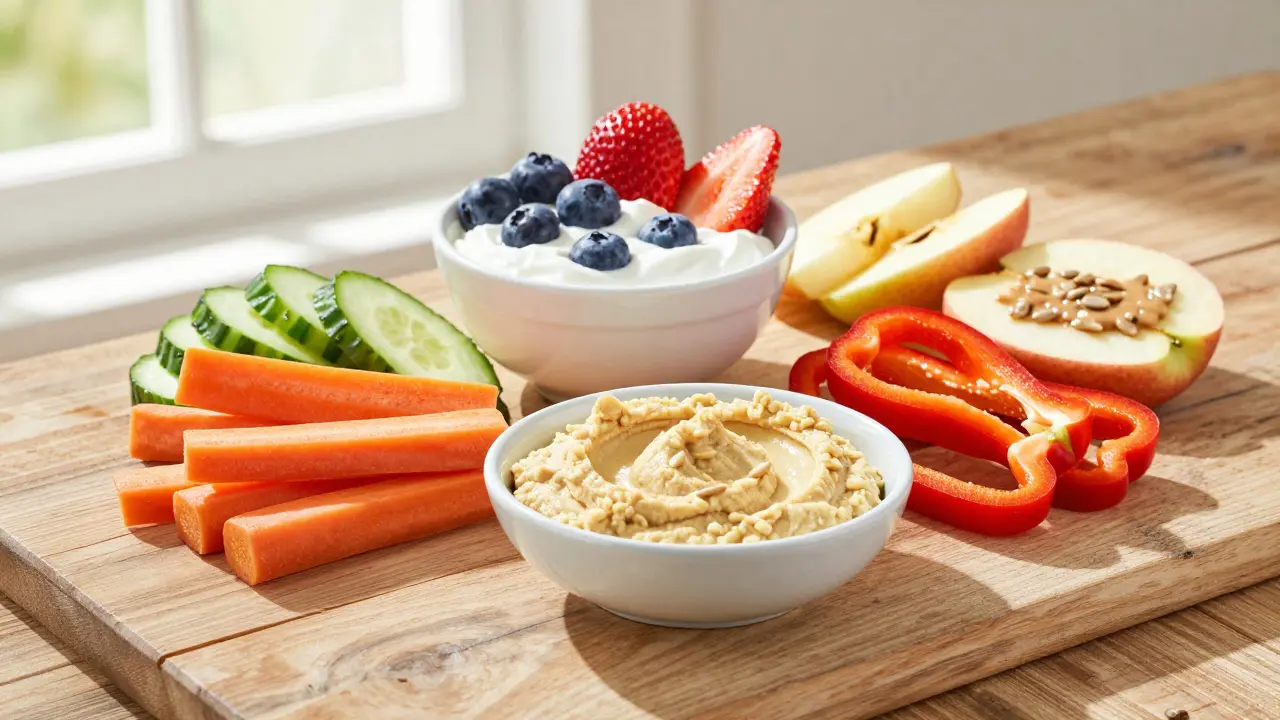
- Veggie Sticks with Hummus: Carrots, cucumbers, and bell peppers provide crunch and vitamins. Hummus adds protein and healthy fats from chickpeas and tahini. It’s a classic for a reason-it works.
- Greek Yogurt with Berries: Greek yogurt has twice the protein of regular yogurt. Add blueberries or strawberries for antioxidants and natural sweetness. If your child hates plain yogurt, mix in a teaspoon of honey or a dash of cinnamon.
- Nut Butter on Apple Slices: Apples provide fiber and hydration. Peanut butter or almond butter adds protein and fat. For schools with nut allergies, sunflower seed butter is a safe and tasty alternative.
- Hard-Boiled Eggs: They are portable, cheap, and packed with high-quality protein and choline, which is vital for memory and brain health. Sprinkle with a little paprika or salt if your child likes flavor.
- Cheese and Whole Grain Crackers: Cheese offers calcium and protein. Choose whole grain crackers to get that essential fiber boost. Look for brands with less than 5 grams of added sugar per serving.
Preparation tip: Spend twenty minutes on Sunday chopping veggies and portioning out snacks for the week. Store them in clear containers in the fridge so they are visible and easy to grab. Out of sight often means out of mind, especially for busy mornings.
Navigating School Rules and Allergies
School environments add another layer of complexity. Many schools have strict "nut-free" policies to protect children with severe allergies. This eliminates peanuts and tree nuts, which are common snack staples. Don’t worry; there are plenty of alternatives.
| Nut-Based Option | Allergy-Friendly Alternative | Nutritional Benefit | |
|---|---|---|---|
| Peanut Butter | Sunflower Seed Butter (SunButter) | High in Vitamin E and healthy fats | |
| Trail Mix with Almonds | Rice Cakes with Pumpkin Seeds | Zinc and magnesium for immune support | |
| Walnuts | Roasted Chickpeas | High fiber and plant-based protein | |
| Almond Milk | Oat Milk or Soy Milk (fortified) | Calcium and Vitamin D for bone health |
Always check the label for "may contain traces of nuts" if your child has a severe allergy, or if you are buying for a shared classroom environment. Cross-contamination is a real risk, and safety must come first.
Handling Picky Eaters Without Stress
If your child refuses anything green or brown, don’t panic. Picky eating is a normal phase for many children, often peaking between ages two and six. The goal is exposure, not force-feeding. Research shows it can take up to fifteen exposures to a new food before a child accepts it.
Try these strategies:
- Offer Choices: Instead of asking "Do you want a snack?" ask "Would you like apple slices or carrot sticks?" This gives them control while ensuring the option is healthy.
- Dip Everything: Kids love dipping. Offer yogurt, guacamole, or hummus as dips for fruits and veggies. The texture change can make a big difference.
- Involve Them: Take your child grocery shopping and let them pick one new fruit or vegetable. If they help prepare the snack, they are more likely to try it.
- Keep It Small: A huge plate of broccoli can be intimidating. Start with two or three florets. Success builds confidence.
Never use dessert as a reward for eating vegetables. This implies that vegetables are punishment and sweets are prizes. Instead, serve healthy foods regularly without making a big deal out of them. Consistency is key.

Reading Labels Like a Pro
Marketing can be misleading. A box labeled "Whole Grain" might still be loaded with sugar. Always flip the package and read the Nutrition Facts label. Here is what to look for:
- Added Sugars: Aim for snacks with less than 5 grams of added sugar per serving. Watch out for hidden names like cane juice, maltodextrin, or high-fructose corn syrup.
- Fiber Content: Look for at least 3 grams of fiber per serving. Higher is better.
- Protein: Try to find snacks with at least 5 grams of protein. This helps with satiety.
- Ingredient List Length: Shorter lists are generally better. If you can’t pronounce an ingredient, think twice about putting it in your child’s body.
For example, a popular "fruit snack" might list fruit juice concentrate as the first ingredient. This means it is mostly sugar with a hint of fruit flavor. Opt for dried fruit instead, but remember that drying concentrates the sugar, so portion control is important. A small handful of raisins is fine; a cup is too much sugar.
Hydration: The Forgotten Snack
Sometimes, thirst masquerades as hunger. Children may ask for a snack when they are actually dehydrated. Dehydration can cause fatigue, headaches, and poor concentration, mimicking the symptoms of low blood sugar. Keep water bottles accessible throughout the day. Infuse water with lemon, cucumber, or berries if your child finds plain water boring. Limit sugary drinks like soda and sports drinks, which offer empty calories and contribute to dental cavities.
How many snacks should my child have each day?
Most children benefit from two structured snacks per day: one in the mid-morning and one in the mid-afternoon. This prevents them from becoming overly hungry at mealtimes. However, active children or those growing rapidly may need a third smaller snack. Listen to your child’s hunger cues rather than sticking to a rigid clock schedule.
Are store-bought granola bars healthy?
Many commercial granola bars are essentially candy bars disguised as healthy food. Check the label carefully. If sugar is the first ingredient, avoid it. Look for bars where whole grains, nuts, or seeds are listed first. Alternatively, make your own using oats, nut butter, and a touch of honey. Homemade bars allow you to control the sugar content and ensure fresh ingredients.
Can I give my toddler raw nuts?
No, raw whole nuts are a significant choking hazard for children under four years old. Instead, offer nut butters spread thinly on toast or mixed into oatmeal. You can also use finely ground nuts or nut powders to add nutrition without the risk. Always supervise young children while they are eating.
What is the best snack for a child with diabetes?
Children with diabetes need snacks that balance carbohydrates with protein and fat to prevent blood sugar spikes. Consult their pediatrician or dietitian for specific carb counts. Generally, options like cheese sticks, hard-boiled eggs, or celery with peanut butter are good choices because they have minimal impact on blood glucose levels compared to pure carbohydrate snacks.
How do I stop my child from begging for junk food?
The most effective strategy is prevention: don’t buy the junk food. If it’s not in the house, they can’t ask for it. Explain calmly that your family eats certain foods because they help us grow strong. Be consistent. If you occasionally allow treats, frame them as occasional events rather than daily expectations. Modeling healthy eating habits yourself is also crucial; children mimic what they see.