

One in five adults in Australia experiences a mental health condition each year. That’s not a distant statistic-it’s your neighbor, your coworker, your sibling, maybe even you. Yet, we still treat mental health like a private shame, something to whisper about, not talk about openly. The truth is, mental health isn’t just about being sad or anxious. It’s about how we think, feel, and function every single day. And right now, in 2025, it’s more critical than ever.
What Mental Health Really Means
Mental health isn’t the absence of mental illness. It’s the ability to handle stress, make meaningful connections, work productively, and recover from setbacks. It’s the quiet strength it takes to get up on a Monday after a sleepless night, to say no when you’re overwhelmed, to ask for help when you’re drowning. It’s not a luxury. It’s the foundation of everything else in life.
Think about it: how many of us have pushed through burnout because we were told to ‘just tough it out’? How many students have skipped meals because they were too anxious to eat? How many parents have stayed silent because they felt guilty for not being ‘strong enough’? These aren’t personal failures. They’re signs of a system that ignores mental health until it breaks.
The Rising Tide of Stress
In 2025, stress isn’t just about deadlines or traffic. It’s the constant hum of digital overload-the 3 a.m. scroll through news feeds, the pressure to be always available, the fear of falling behind in a world that never stops. A 2024 survey by the Australian Psychological Society found that 68% of working adults reported chronic stress levels that affected their sleep, relationships, and physical health. That’s not normal. That’s a warning sign.
Young people are hit hardest. Teens today are more isolated than ever, despite being more connected online. A 2025 study from the University of Melbourne found that 42% of 16-24-year-olds felt ‘chronically disconnected’ from their peers. Social media doesn’t replace real connection-it often replaces it with comparison, judgment, and performance.
Mental Health and Physical Health Are the Same Thing
When you’re depressed, your immune system weakens. When you’re anxious, your heart rate spikes, your digestion shuts down, your muscles stay tight. The body doesn’t separate mental and physical pain. Chronic stress raises cortisol levels, which increases the risk of heart disease, diabetes, and even cancer. Mental health isn’t a side note in your health journey-it’s the engine.
People with untreated depression are 40% more likely to develop type 2 diabetes. Those with anxiety disorders have a 50% higher chance of developing hypertension. These aren’t random correlations. They’re cause and effect. Ignoring mental health isn’t just emotionally dangerous-it’s physically deadly.
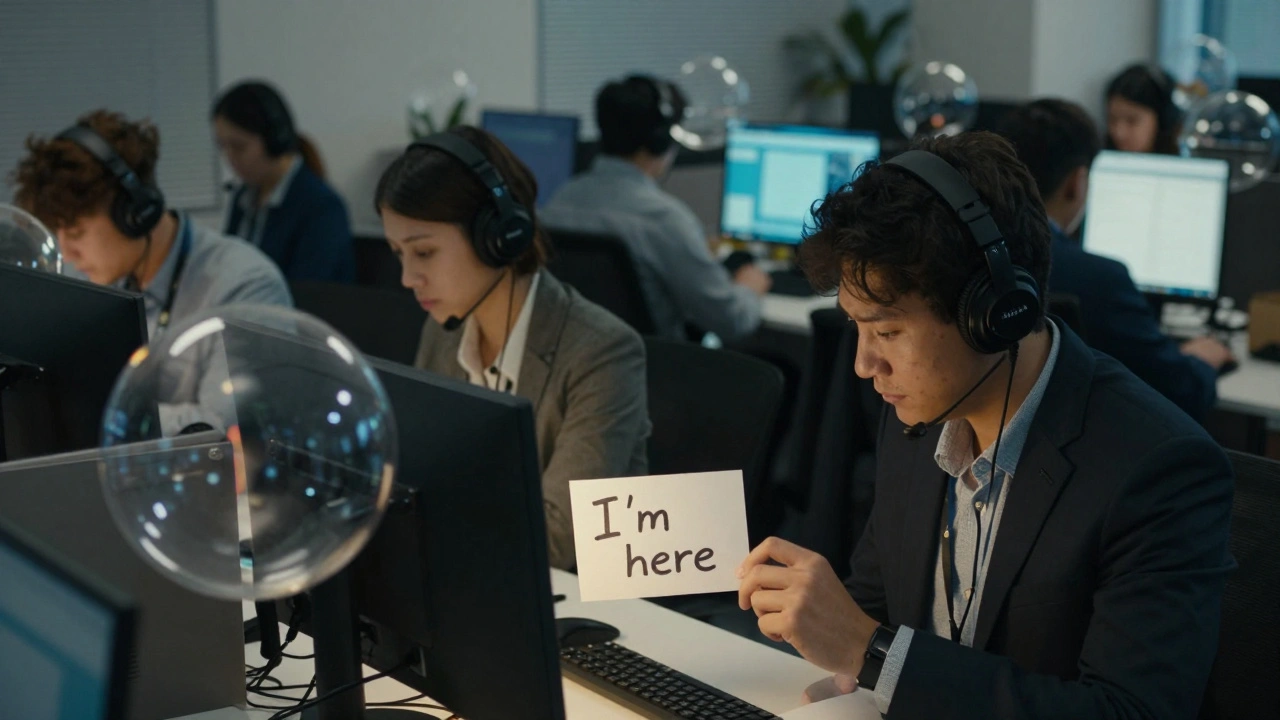
Workplaces Are Failing Us
Companies still treat mental health like a perk, not a priority. ‘Wellness programs’ that offer yoga mats and free smoothies don’t fix toxic cultures. What actually helps? Flexible hours. Real mental health days. Managers trained to spot burnout-not just productivity drops. The World Health Organization estimates that depression and anxiety cost the global economy $1 trillion a year in lost productivity. Yet, most employers still won’t fund therapy sessions.
In Australia, only 37% of workplaces have a formal mental health policy. That means two out of three employees are left to figure it out alone. And if you’re in a job where asking for help means risking your promotion-or worse, your job-you’re not just stressed. You’re trapped.
Stigma Still Has a Grip
‘Just think positive.’ ‘You’re overreacting.’ ‘I’ve been through worse.’ These phrases still echo in homes, schools, and hospitals. They come from good intentions-but they shut people down. Mental health struggles aren’t a choice. You don’t wake up and decide to be depressed. You don’t choose to have panic attacks.
Stigma doesn’t just hurt feelings. It keeps people from seeking help. In Australia, only 45% of people with a diagnosed mental illness see a professional. The rest suffer in silence. Why? Fear of judgment. Fear of being seen as weak. Fear that their employer, their family, their friends will treat them differently.

What Actually Works
There’s no magic pill. But there are proven steps that make a difference.
- Therapy works. Cognitive Behavioral Therapy (CBT) has been shown to reduce symptoms of depression and anxiety in 60-70% of cases within 12 weeks.
- Community matters. People with strong social ties are 50% less likely to develop depression. That’s not just friendship-it’s belonging.
- Movement helps. Just 30 minutes of walking five times a week can be as effective as medication for mild to moderate depression.
- Sleep isn’t optional. Poor sleep is both a symptom and a cause of mental health issues. Fixing sleep often fixes everything else.
And yes-medication helps too. For many, antidepressants or anti-anxiety meds are life-saving. There’s no shame in that. Just like you wouldn’t refuse insulin for diabetes, you shouldn’t refuse help for your brain.
Change Starts With One Conversation
You don’t need to be a therapist to make a difference. You just need to be willing to listen. Not to fix. Not to advise. Just to sit with someone and say, ‘That sounds really hard. I’m here.’
Ask your coworker how they’re really doing-not just ‘how’s it going?’ Ask your teen if they’ve been sleeping. Check in on your parent who’s been ‘fine’ for six months straight. Normalize the hard conversations. Because when people feel safe to speak up, recovery becomes possible.
It’s Not About Being Happy All the Time
Mental health isn’t about forcing yourself to smile. It’s about giving yourself permission to feel. To grieve. To rest. To say no. To be messy. To ask for help without apology.
Society doesn’t need more superheroes. It needs more humans. People who know it’s okay to not be okay. Who understand that healing isn’t linear. That progress isn’t loud. Sometimes, it’s just getting out of bed. That’s enough.
Today’s world is fast, loud, and exhausting. But we don’t have to keep pretending we’re fine. We can choose to be honest. To be kind-to ourselves and to each other. Because mental health isn’t a personal problem. It’s a social one. And fixing it starts with us.
Is mental health really as common as people say?
Yes. In Australia, about 1 in 5 adults will experience a mental health condition each year. Globally, the World Health Organization says nearly 1 billion people live with a mental disorder. It’s not rare-it’s widespread. And it’s not a phase, a weakness, or a choice. It’s a medical reality.
Can mental health issues go away on their own?
Sometimes symptoms ease temporarily, but untreated conditions often get worse. Depression doesn’t just vanish after a vacation. Anxiety doesn’t disappear because you ‘think positively.’ Professional support-therapy, medication, lifestyle changes-dramatically improves outcomes. Waiting for it to fix itself is like waiting for a broken bone to heal without a cast.
What’s the difference between stress and a mental health condition?
Stress is a reaction to a situation-it’s temporary. A mental health condition is a persistent change in how you think, feel, or behave that interferes with daily life. Stress might make you feel tired after a big project. Depression makes you feel numb for weeks. Anxiety might make you nervous before a presentation. An anxiety disorder makes you avoid leaving the house. One is normal. The other needs care.
Is therapy worth it if I can’t afford it?
Many public health services in Australia offer free or low-cost mental health support. Medicare provides rebates for up to 20 sessions a year with a psychologist. Community health centers, nonprofits like Beyond Blue, and university clinics often have sliding scale fees. You don’t need to pay hundreds per session to get help. Start with your GP-they can connect you to resources.
How can I help someone who won’t talk about their mental health?
You can’t force someone to open up. But you can create space for it. Say: ‘I’ve noticed you’ve seemed quiet lately. I’m here if you want to talk-or even just sit together.’ Don’t push. Don’t fix. Just show up. Sometimes, knowing someone cares is the first step toward healing.
Does mental health improve with age?
Not automatically. Older adults face unique challenges-loneliness, grief, chronic illness, loss of independence-and these can trigger or worsen mental health conditions. But with support, many find greater emotional resilience. The key isn’t age-it’s connection, purpose, and access to care.