
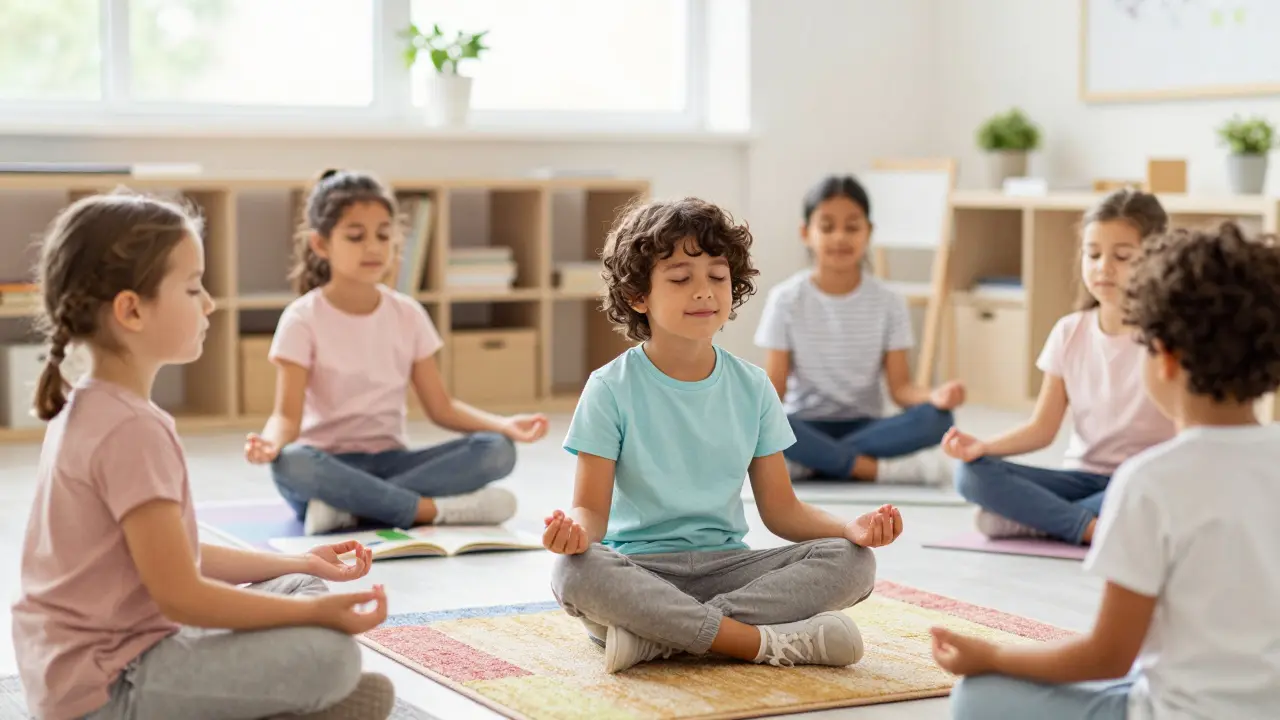
Why let children wait until adulthood to find peace?
Most of us spent our school years fighting to stay in our seats, battling sudden mood swings, or feeling completely overwhelmed by a math test. We weren't taught how to handle the noise inside our heads. But imagine if your child had a "pause button" for their emotions. That is exactly what meditation for kids is a practice of training the mind to focus and redirect thoughts, helping children manage stress and improve emotional regulation. It is not about sitting in stony silence for an hour; it is about giving them the tools to handle a chaotic world without breaking down.
Quick Wins for Young Minds
- Lowering cortisol levels to reduce anxiety.
- Improving focus and attention spans in the classroom.
- Developing empathy by understanding their own feelings.
- Better sleep patterns and easier bedtime transitions.
Teaching the basics without the boredom
If you tell a six-year-old to "clear their mind," they will probably just tell you that they are thinking about dinosaurs. The trick is to make the experience concrete. Children think in images and sensations, not abstract concepts. Instead of focusing on the void, have them focus on a physical sensation. This is the core of Mindfulness, which is the psychological process of bringing one's attention to the present moment without judgment. When a child focuses on the feel of their breath or the sound of a distant bird, they are practicing the same neurological pathways that adults use for deep meditation.
Try the "Balloon Belly" technique. Tell your child to imagine there is a bright red balloon in their stomach. As they breathe in, the balloon fills up and pushes their belly out. As they breathe out, the balloon deflates. This turns a breathing exercise into a game, making it much more likely they will actually do it. By associating the act of breathing with a visual image, you bypass the frustration of "doing it wrong."
Matching the method to the age group
A toddler cannot meditate the same way a ten-year-old does. Their brains are at completely different stages of development, especially regarding the prefrontal cortex, which handles impulse control. You have to pivot your approach based on their developmental milestones.
| Age Group | Best Approach | Typical Duration | Focus Point |
|---|---|---|---|
| Toddlers (2-4) | Sensory Play | 1-2 Minutes | Touch and Sound |
| Young Children (5-8) | Guided Imagery | 3-5 Minutes | Visualization |
| Pre-teens (9-12) | Breath Awareness | 5-10 Minutes | Internal Sensations |
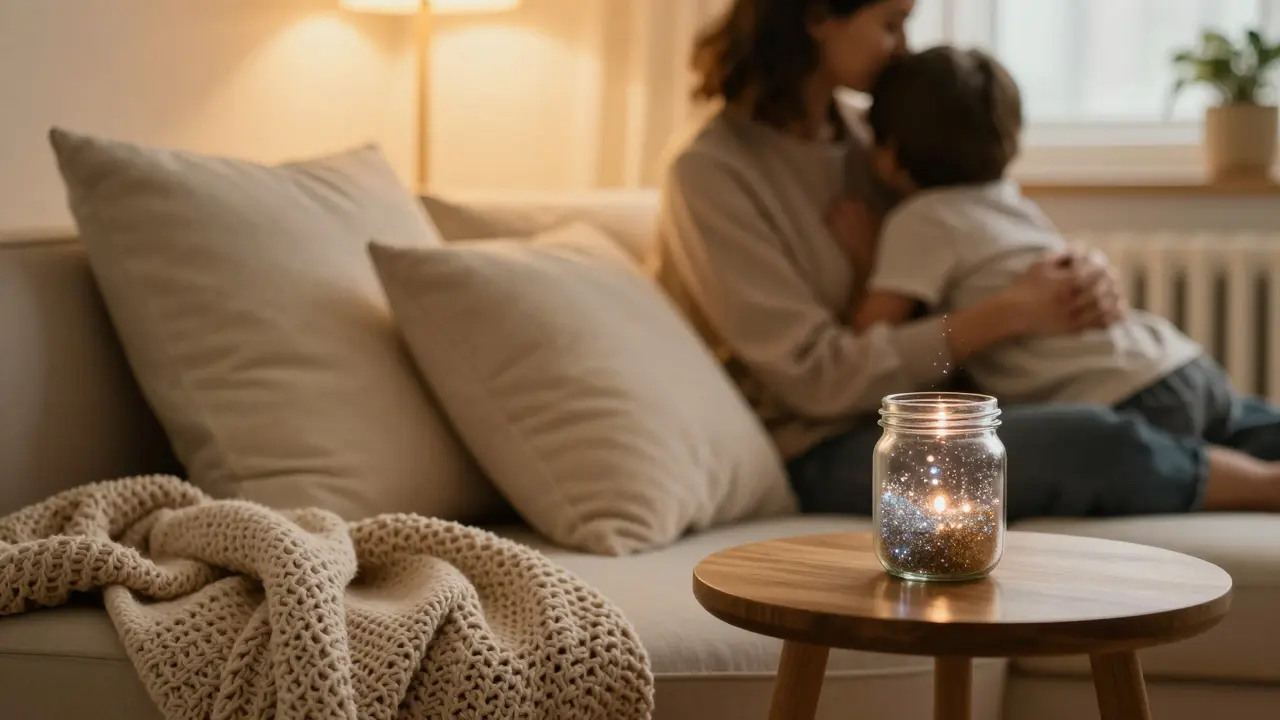
For the little ones, use a "glitter jar." Fill a jar with water and glitter. Shake it up to show how their brain feels when they are angry or excited. Then, watch the glitter slowly settle to the bottom. Explain that this is what happens to their mind when they take slow breaths. It provides a visual representation of Emotional Regulation, which is the ability to respond to an emotional experience with a range of socially acceptable emotions.

Dealing with the "I can't sit still" phase
The biggest mistake parents make is forcing their kids to sit perfectly still. If a child is fighting the posture, they aren't meditating; they are stressing about their posture. Let them wiggle. Let them lie on their backs or lean against a pillow. The goal is internal stillness, not external rigidity. If they need to move, try "Walking Meditation." Ask them to notice exactly how their heel hits the floor, then the arch, then the toes. This anchors them in the physical world and stops the mental loop of a tantrum before it peaks.
Integrating these moments into the day is more effective than a scheduled "meditation hour." Try a 30-second "mindful moment" before a meal or right after they get out of the car. This teaches them that calm is a state they can access anywhere, not just in a special quiet room. This creates a habit of Stress Management, allowing them to navigate social pressures and academic stress with more resilience.
Using technology as a bridge
While we often want to keep kids away from screens, there are tools that can actually help them get started. Apps designed for children often use storytelling and gamification to make the process engaging. These tools utilize Guided Imagery, a technique where the narrator describes a peaceful scene-like a beach or a magic forest-to help the child relax their muscles and slow their heart rate. This is especially helpful for kids who struggle with insomnia or night terrors.
However, the best app is a parent. When children see you taking a moment to breathe or admitting, "I'm feeling a bit stressed, I'm going to take three deep breaths," they learn through observation. Modeling the behavior is more powerful than any set of instructions. You are showing them that it is okay to acknowledge a feeling and then consciously choose how to respond to it.
Common pitfalls to avoid
Avoid making meditation a punishment. Never say, "You've been naughty, go sit in the corner and meditate." This associates the practice with shame and failure. Meditation should be a reward or a neutral tool for wellness. If they use it to avoid a chore, that is a different problem. Keep the boundaries clear: meditation is for the mind, but the dishes still need to be done.
Another mistake is expecting instant results. You won't see a Zen master in your living room after one session. The benefits of Neuroplasticity-the brain's ability to reorganize itself by forming new neural connections-take time. Consistent, short bursts of practice are better than one long session every two weeks. You are literally rewiring their brain to be less reactive to stress.
Integrating calm into a busy school schedule
School is often a high-pressure environment. Between standardized testing and playground politics, kids are under constant stimulation. Teach them the "Secret Breath." This is a technique where they put their hand on their belly and breathe deeply without anyone else noticing. They can do this during a test or while waiting in line for lunch. It gives them a sense of autonomy and a private sanctuary they can visit whenever they feel the world is too loud.
Encourage them to notice the "gap." The gap is the tiny space between a feeling (like anger) and the reaction (like screaming). The more they practice meditation, the wider that gap becomes. When they can notice the anger and think, "Oh, I'm feeling angry right now," instead of just being the anger, they have won a massive victory in personal development.
At what age can a child start meditating?
Children as young as 2 or 3 can begin with simple sensory-based mindfulness, such as noticing sounds or feeling their breath. The complexity of the practice simply grows as their cognitive abilities develop.
How long should a child's meditation session last?
Keep it short. For toddlers, 1-2 minutes is plenty. For elementary-age children, 3-5 minutes is a good goal. The key is consistency over duration; a few minutes every day is better than a long session once a week.
What if my child refuses to sit still?
Don't force the posture. Let them lie down, stretch, or try a walking meditation. Focus on the mental awareness rather than the physical stillness. If they are too restless, switch to a high-energy movement that leads into a slow-down, like jumping jacks followed by three deep breaths.
Can meditation help with ADHD or focus issues?
Yes. While not a replacement for professional medical treatment, mindfulness practices can help children with ADHD strengthen their "attention muscle," allowing them to notice when their mind has wandered and gently bring it back to the task at hand.
How do I handle a child who gets upset during meditation?
Sometimes sitting in silence brings up difficult emotions. If your child becomes upset, acknowledge the feeling without judgment. Tell them, "It's okay to feel sad or scared right now," and offer a hug. This turns the session into a lesson on emotional safety.
Next steps for families
If you are new to this, start by creating a "calm down corner" in your home. Fill it with a few soft pillows, a glitter jar, and maybe some calming music. This isn't a timeout spot, but a sanctuary where the child can go by choice when they feel overwhelmed. Make it a positive place associated with peace, not punishment.
For parents who struggle with their own stress, try meditating with your child. Use it as a bonding activity. When you both breathe together, you are co-regulating your nervous systems. This strengthens the emotional bond and shows your child that seeking peace is a lifelong journey, not just a chore for kids.